How Mini Piles are Installed
The mini piling installation process follows a controlled sequence. This sequence is designed to ensure piles are installed accurately, safely, and to the required depth. The exact method varies depending on the piling system used. That said, the full process remains consistent across most projects.
Each stage is focused on achieving a stable foundation. This works by transferring loads into suitable bearing strata beneath the site.
Design and Planning
Site information, structural loads, and ground conditions shape the piling system design from the start. This includes determining pile depth, diameter, spacing, and the most appropriate installation method.
Where a ground investigation is available, it is used to inform the design. Where it is not, design assumptions are made based on typical ground conditions. These are then refined during installation.
Site Preparation and Setting Out
The working area is prepared to allow safe access for piling equipment. Contractors clear the site, set up access routes, and mark out pile locations to match the design.
Accuracy at this stage is critical. Pile positions directly affect how loads are transferred through the foundation.
Pile Installation
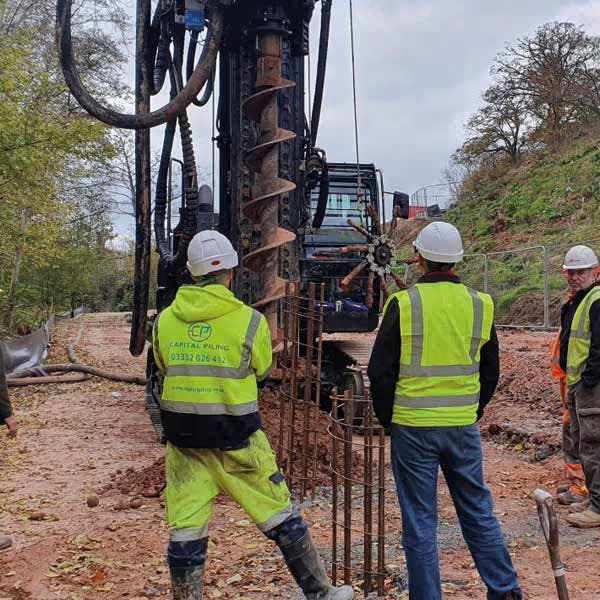
Piles are installed using compact piling rigs suited to the site conditions. Depending on the method selected, piles may be drilled, driven, or screwed into the ground.
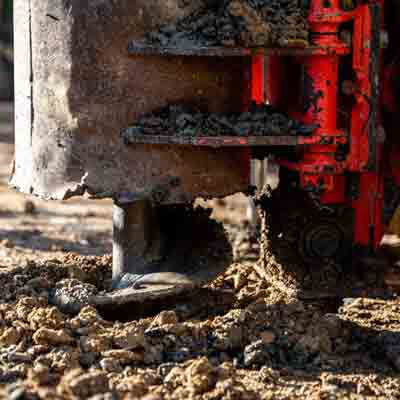
- Augered systems involve drilling a borehole to the required depth
- Driven systems install piles using impact or pressure
- Screw piles are advanced into the ground using rotational force
The chosen method depends on ground conditions, access, and structural requirements.
Reaching Design Depth
Each pile is installed to a predetermined depth or until suitable bearing strata are achieved. This ensures that loads are transferred into stable ground rather than relying on weaker surface soils.
Depth may vary across a site depending on ground conditions encountered during installation.
Reinforcement Placement
Where required, steel reinforcement is inserted into the pile. This may be in the form of a central bar, reinforcement cage, or steel casing. It all depends on the design and piling method.
Reinforcement is used where piles are subject to extra forces. These include bending, tension, or lateral loading.
Concrete or Grout Placement
Once installed, the pile is filled with concrete or grout to form a solid structural element. In augered systems, this is typically carried out as the auger is withdrawn to maintain stability of the bore.
The material bonds with the surrounding ground. It then transfers loads through both shaft friction and end bearing.
Pile Cropping
After curing, the tops of the piles are cut back to the required level. This process exposes sound concrete and any reinforcement. It prepares the pile for connection to the foundation system.
Correct cropping is essential to ensure a proper structural connection.
Connection to Ground Beams or Slab
Once piles are prepared, they are connected using ground beams or a reinforced concrete slab. This links individual piles together. It allows loads to be distributed across the foundation system rather than acting on isolated points.
This stage completes the transition from individual piles to a functioning structural foundation.
Quality Control During Installation
Contractors check throughout that the piles match the design depth, alignment, and specification. Ground conditions encountered during installation are also monitored. They can influence final design decisions.
This ensures the foundation performs as intended. It also reduces the risk of issues during later stages of construction.
A Controlled and Adaptable Process
Mini piling is not a fixed process but a controlled system. It adapts to site conditions as work progresses. Ground conditions, access, and structural requirements shape the installation.
This flexibility is one of the key reasons mini piling is often used on projects where conditions are uncertain or constrained.
Do You Need More Information?
Do you need further guidance on the mini piling installation process? Would you like to discuss a specific project? If so, a specialist contractor such as Capital Piling can review your drawings and site conditions. From this, we can recommend the most suitable approach.