Other Servces
Mini Piling
CFA Piling (Continuous Flight Auger)
SFA Piling (Sectional Flight Auger)
SCD Piling (Steel Cased Driven Piling)
SFA Grout Injection Piling
Screw Piling / Helical Piling
Ground Beams & RC Slabs
Contact information
CFA Piling (Continuous Flight Auger)
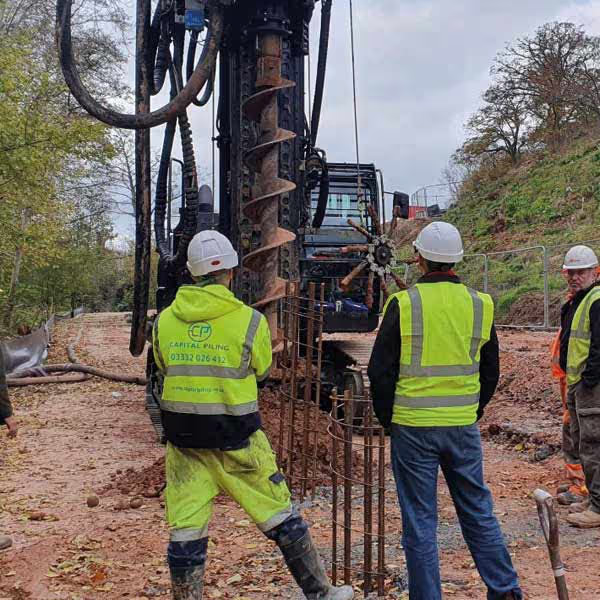
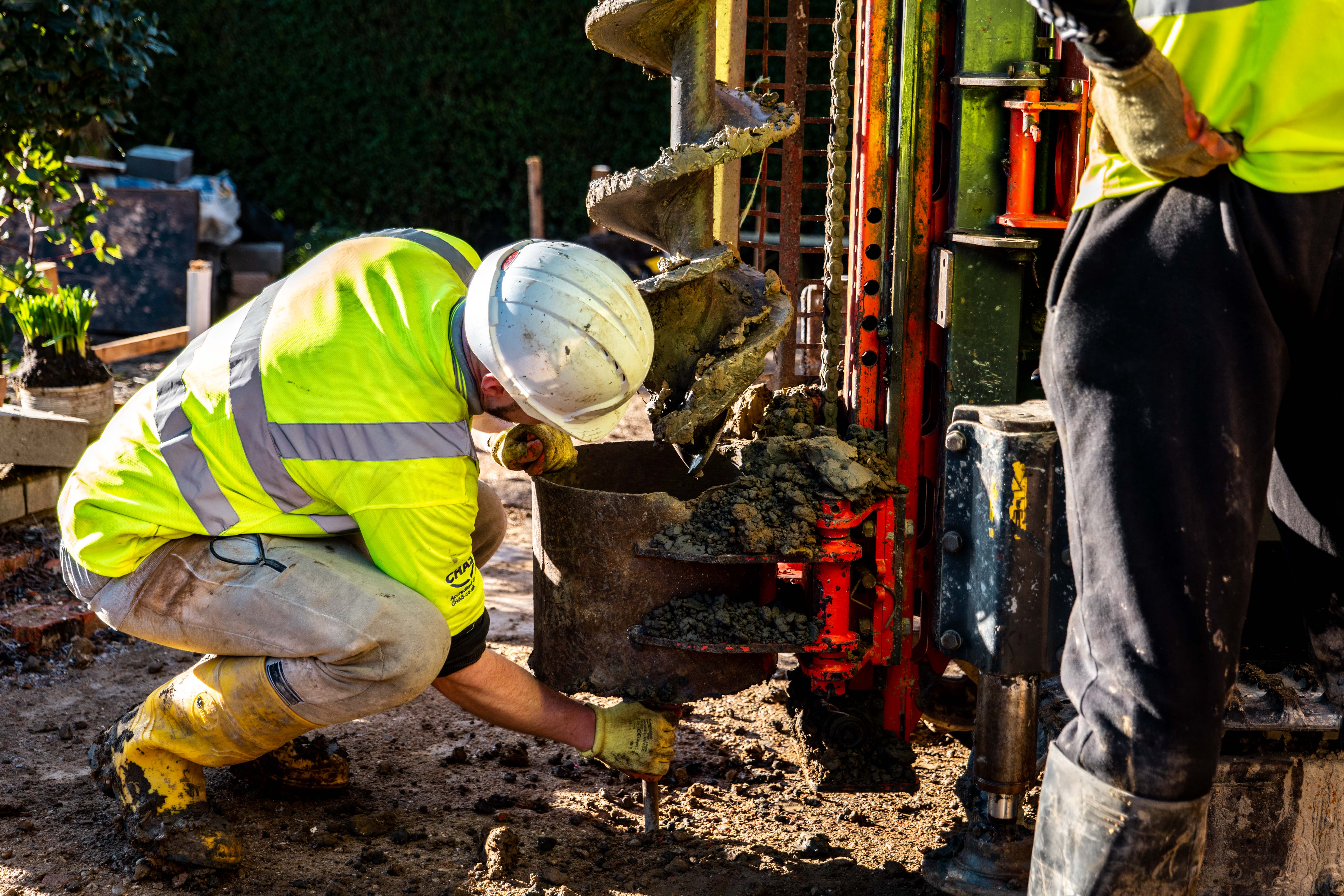
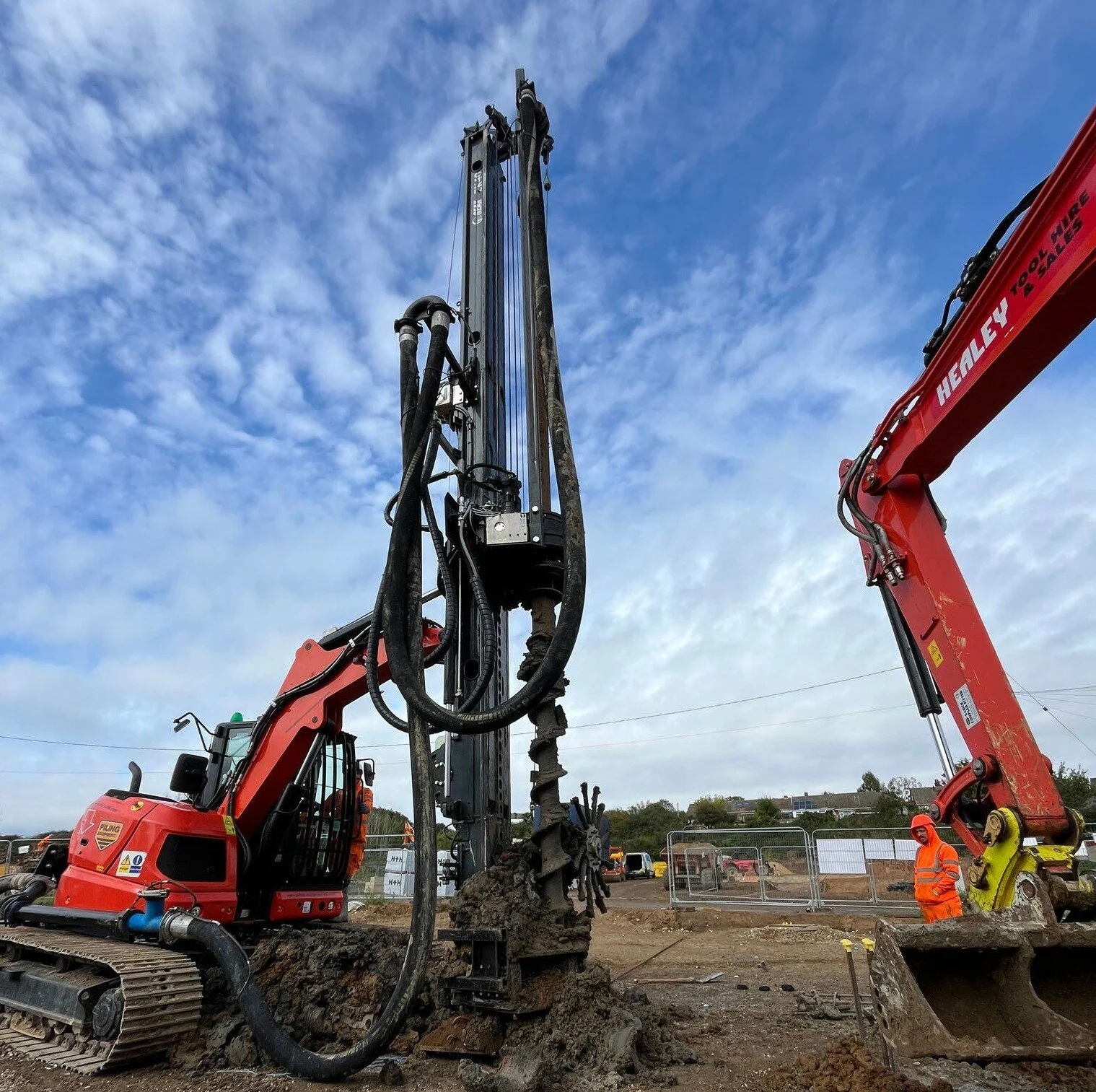
CFA piling is a widely used foundation solution for homes, extensions, apartment schemes and larger commercial developments. The process involves drilling and filling the pile with concrete in one continuous operation, creating strong reinforced concrete foundations that safely support the structure above.
At Capital Piling, we deliver CFA piling on projects of all sizes - from single residential builds to larger multi-unit and commercial developments. Each pile is designed to suit the specific ground conditions, structural requirements and overall needs of your project.
Low-vibration methods
Tight-access sites
Fully compliant & insured
Typical Applications for CFA Piling:
Residential developments and large scale developments
Commercial and mixed-use buildings
Industrial buildings and warehouse units
Sites with clay, made ground, or variable soil profiles
Sites with variable or challenging ground conditions
Is CFA Piling Right for Your Project?
The most appropriate piling method depends on site constraints, load requirements, and engineering design. Our team will review your project and advise on the most suitable foundation solution before any commitment is made.
What Is Continuous Flight Auger (CFA) Piling?
CFA piling is a bored piling method where a hollow stem auger drills to depth before concrete is pumped through the auger as it is withdrawn. This creates a continuous reinforced concrete pile without leaving the bore open.
Its controlled installation process makes it particularly suited to urban environments and sites where ground movement must be carefully managed.
Need Assistance?
to take the next step in your project.
Subheading one
2
3
2
1
.
.
.
.
.
2
3
2
1
7
8
3
9
2
6
3
8
Residential piling jobs we’ve completed over the years.
Subheading two
5
3
2
1
.
.
.
.
.
2
3
2
1
7
8
3
9
2
6
3
8
Commercial piling projects we’ve delivered across sites.


Why Choose CFA Piling?
CFA piling offers several practical and technical advantages:
Reduced vibration compared to driven piling methods
Consistent pile formation through continuous concrete placement
Suitable for a wide range of ground conditions, including London clay and made ground
Efficient installation for programme-sensitive projects
Adaptable pile diameters and depths to suit structural design requirements
How CFA Piling Is Installed
Site Investigation & Design
Continuous Flight Auger Drilling
Concrete Placement
Reinforcement & Completion
Ground Beams & RC Slabs
Mini piling only – where ground beams or slabs are providedseparately
Mini piling with RC ground beams and/or RC slabs – a fully coordinated package
RC ground beams and RC slabs only – where piling has already been completed


Let’s talk about your project
Whether you’re ready to proceed or still exploring options, our team is here tohelp you move forward with confidence.
Share your project details
Drawings and site details can be shared now or later.
Why contact us
No obligation — just clear, honest advice
Reviewed by an experienced piling specialist
Suitable for domestic and commercial projects

Would you prefer to speak to us directly?
Frequently Asked Questions
What is mini piling?
Mini piling is a specialised foundation solution using high-strength, smaller diameter piles. They tend to be between 100mm and 450mm. The method is for sites with restricted access, low headroom, or poor soil conditions. These can make traditional piling impossible. Mini piling is the industry standard for stabilising existing structures (underpinning). It's also used for building house extensions and working within tight urban footprints.
Do you offer quotations/price match quotes for mini piling projects?
Absolutely. We provide fully itemised, transparent quotations. Our team tailors these to your specific ground conditions and structural requirements. We are committed to offering the best value in the market. If you receive a written quote from a comparable provider for the same specification, we aim to match that price. Call us at 0333 202 6412 for a no-obligation assessment.
When can you start/finish work for mini piling projects?
One of the key benefits of mini piling is rapid mobilisation. Our compact rigs are easier to transport and set up than heavy machinery. This means we can often begin work sooner than traditional piling contractors. Project duration depends on the number of piles and ground depth, but we pride ourselves on efficient turnaround times. Contact us today to check our current lead times and secure your slot.
Do I need to hire any additional equipment for mini piling projects?
No, we provide a complete end-to-end service. Our fleet includes state-of-the-art, self-contained mini piling rigs. These are capable of fitting through standard doorways and operating in confined spaces. We supply all necessary grout pumps, reinforcement cages, and ancillary tools. This ensures you face no hidden hire costs or logistical headaches.
Is mini piling noisy, or will it cause vibration damage to existing structures?
Mini piling is explicitly designed as a low-vibration solution. This makes it the safest option for working adjacent to existing foundations, party walls, or in dense residential areas. Our bored piling techniques cut into the ground rather than hammering it. This is unlike traditional driven piling, which relies on heavy impact. It significantly minimises noise pollution and ground movement. This protects the structural integrity of your property and prevents disturbance to neighbours.
Can mini piling be used in difficult ground conditions or clay soil?
Yes. Mini piling is exceptionally versatile and effective in challenging soil profiles. This includes loose gravel, "made ground" (rubble), and shrinkable clay prone to subsidence. We employ specialised techniques to prevent borehole collapse in unstable soil. These include using temporary casings. Such ensures we can achieve the load-bearing capacity and protection against ground heave. This is even in cases where standard trench footings would fail.