Noise and Vibration Considerations
Noise and vibration are key considerations in piling works. This matters most for projects close to other structures or in residential areas. The installation method affects nearby buildings, site conditions, and project constraints.
Mini piling runs quieter than traditional systems and produces less vibration.
Why Noise and Vibration Matter
Excessive noise and vibration can affect both the site and the surrounding environment.
High vibration levels can lead to movement in nearby structures. This matters most for older buildings or those on shallow foundations. Noise can also create disruption for occupants. This means it may be subject to local authority restrictions.
For this reason, these factors often shape the choice of piling method.
Differences Between Piling Methods
The installation method drives how much noise and vibration the work produces.
Driven piling methods involve hammering piles into the ground. They generate high levels of both noise and vibration due to repeated impact forces.
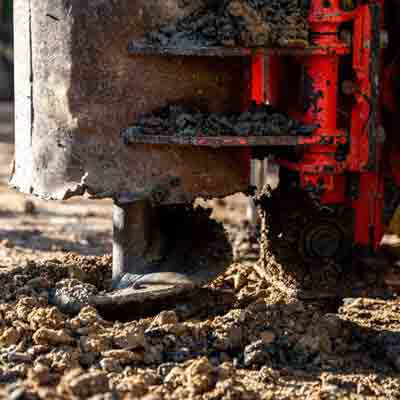
In contrast, bored or augered piling methods involve drilling rather than impact. This results in lower noise and reduced ground vibration.
Mini piling often uses these lower-impact methods. This makes it more suitable for constrained or sensitive sites.
Low Vibration Installation Methods
Mini piling systems minimise ground disturbance during installation.
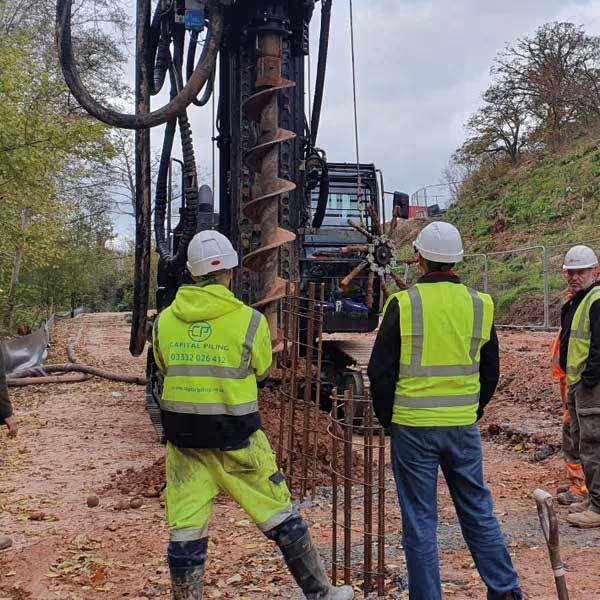
Augered and screw piling methods advance the pile into the ground in a controlled manner. They avoid the high-energy impacts associated with driven systems. This reduces the transfer of vibration through the surrounding soil. It also limits the potential for structural movement.
This is particularly important when working close to existing buildings. It's also essential in areas where ground conditions are already variable.
Noise Control on Site
Noise levels vary depending on the equipment and method used.
Impact-driven systems produce sharp, repeated noise from the hammer blows. Drilling and hydraulic pressing produce steady, low noise.
Mini piling rigs are smaller and less energy-intensive. As a result, they tend to generate lower noise levels. This makes them more suitable for residential and urban environments.
Working Near Existing Structures
When piling close to buildings, vibration control becomes critical.
Heavy vibration can crack, settle, or move nearby structures. Low vibration methods reduce this risk. They make piling safe alongside existing foundations.
This makes mini piling a strong choice for extensions, underpinning, and basement works.
Urban and Residential Environments
In built-up areas, construction often happens close to neighbouring properties.
Mini piling is often used in these environments. This is because it allows work to proceed while minimising disturbance. Lower noise and vibration help meet site restrictions and keep working conditions tolerable.
Method Selection Based on Site Conditions
The piling method depends on ground conditions, structural requirements, and environmental constraints.
Where noise and vibration matter, bored, augered, and screw piling beat driven systems. These methods protect nearby structures during installation.
A Controlled Approach to Installation
Mini piling provides a controlled approach to foundation construction. It matches the installation method to the site's constraints.
The right techniques and equipment keep noise and vibration under control. This reduces risk and keeps work safe in sensitive settings.
Do You Need More Information?
Do you need further guidance on noise and vibration considerations in mini piling? If so, a specialist contractor such as Capital Piling can review your site conditions. From this, we can recommend the most suitable installation method.