Reinforcement Design in Mini Piling
Reinforcement design in mini piling refers to the use of steel elements within the pile. This works to improve its structural performance. The concrete or grout provides compressive strength. Contractors add reinforcement where piles need extra strength. It works to resist forces such as bending, tension, or shear.
Not all mini piles demand the same level of reinforcement. Three factors shape the design: structural loads, ground conditions, and the pile's role.
The Purpose of Reinforcement
Reinforcement strengthens the pile to handle different load conditions. While concrete performs well in compression, it has limited tensile capacity. Steel reinforcement provides strength to resist tensile or lateral forces.
Reinforcement matters most when piles face uneven loading, lateral movement, or nearby buildings.
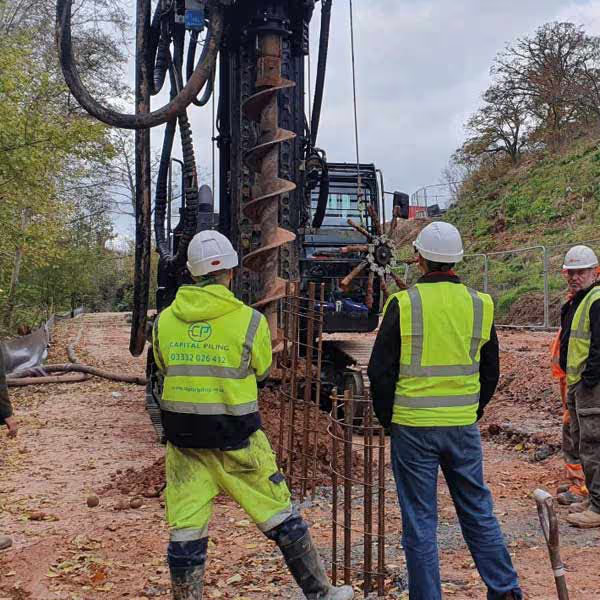
Contractors add steel bars or cages to the pile before or during concreting.
Types of Reinforcement Used
Contractors can reinforce mini piles in several ways. It all depends on the piling method and design requirements.
Common reinforcement types include:
- Central steel bars (often threaded or high-strength bars)
- Reinforcement cages for larger diameter piles
- Steel casing acting as permanent structural reinforcement
In some systems, the steel element extends the full depth of the pile. In others, contractors may only add it in zones of highest stress.
When Reinforcement is Required
Reinforcement is not always required for every pile. Design conditions determine where reinforcement goes.
It is often used:
- Where the pile is subject to bending forces (e.g. lateral loads or eccentric loading)
- Where tension forces are present (such as uplift or structural tie-in)
- Where the pile forms part of an underpinning or structural support system
- For extra durability or redundancy
With compressive loads on good ground, contractors may need little or no reinforcement.
The Influence of Load and Design Conditions
Pile loads shape both the amount and type of reinforcement. Higher loads or more complex structures need more reinforcement.
Design considerations include:
- Axial compression and tension
- Bending moments
- Shear forces
- Interaction with ground beams or slabs
Engineers assess these factors during design. This works to determine the appropriate reinforcement layout.
Ground Conditions and Reinforcement
Ground conditions also play a role in reinforcement design. In stable ground, piles may carry compressive loads, requiring minimal reinforcement. In contrast, variable or weaker ground conditions may introduce extra stresses. These may demand a more robust reinforcement design.
In ground that may move, reinforcement keeps the piles intact. It also prevents cracking or deformation.
Installation and Placement
Contractors install reinforcement immediately after forming the pile bore. This is before or during the placement of concrete or grout. In augered systems, contractors insert reinforcement into the wet concrete. In driven or cased systems, reinforcement may go in during the piling sequence.
Precise placement is critical. The reinforcement must sit in the right position within the pile. This allows it to bond with the surrounding material.
Design Standards and Engineering Control
Structural or geotechnical engineers carry out reinforcement design. This falls under relevant standards and project requirements. It gives the pile the strength and durability it needs.
The design draws on ground investigation data, structural calculations, and site conditions. Contractors adjust the design during installation where needed.
A Controlled Structural Element
Mini piles are more than concrete elements placed in the ground. Engineers design each mini pile for the specific loads it will carry. Reinforcement plays a key role in ensuring that each pile performs under load. This is particularly true in cases where conditions are more complex.
Contractors can adjust reinforcement, depth, diameter, and installation method. This lets mini piling suit a wide range of structural requirements.
Do You Need More Information?
Do you need further guidance on reinforcement design in mini piling? If so, a specialist contractor such as Capital Piling can review your drawings. We'll recommend the most suitable approach based on your structural and ground conditions.