Piling methods
We know every project and every client is different. There’s no one-size-fits-all approach, which is why we’ve made it as simple as possible to contact us in the way that works best for you.
What happens if ground conditions differ from the investigation report?
If unexpected conditions are encountered, works are paused, the issue is assessed, and a solution is agreed with the engineer and client before proceeding.
How long does piling usually take?
Most residential piling works are completed within a few days. Larger or more complex projects may take longer depending on scope and conditions.
How deep do piles typically go?
Pile depth depends on ground conditions and load requirements.It's determined using ground investigation data and confirmed as part of the piling design.
Does piling cause vibration or noise?
Some piling methods generate vibration or noise, but modern equipment and controlled installation techniques help keep this within acceptable limits.
Can piling be carried out near existing buildings or party walls?
Yes. Piling methods are carefully selected to minimise vibration and movement, and works are carried out in accordance with engineer designs and any party wall requirements.
What piling methods do you offer?
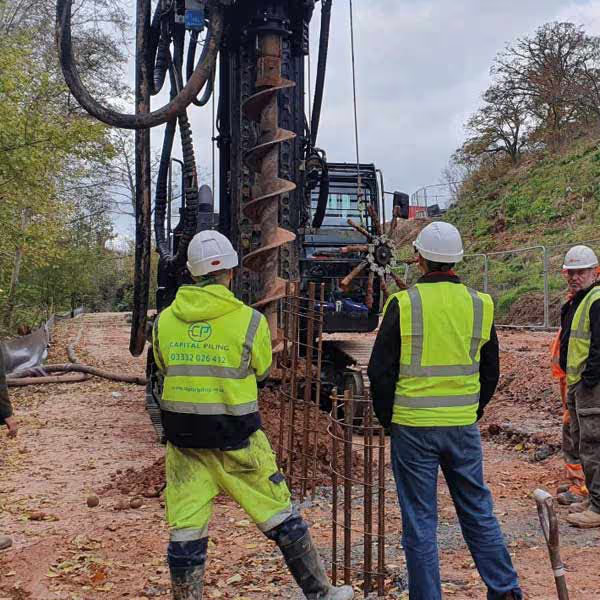
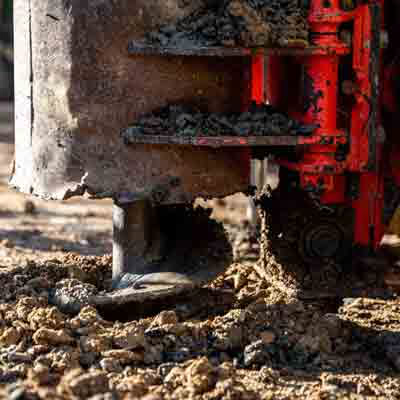
We provide a range of piling solutions including open bore, steel cased driven, screw piling, SFA grout injected, SFA open bore, and mini piling. The method used is selected to suit ground conditions, access constraints, and engineer specifications.
Who makes the final decision on whether piling is required?
The structural engineer makes the final decision, informed by site investigations and design requirements. Building Control then reviews and approves the design.
Do I really need piling, or can it be avoided?
In some cases, foundation designs can be adjusted, but piling cannot be avoided where ground conditions or loads make shallow foundations unsafe. Any changes must be agreed as part of the design and approved by Building Control.
How do I know if piling is the best solution for my project?
This is determined from ground investigation results, trial pits, and the design loads for your structure. If piling is specified, it's to ensure the structure is safe, stable, and compliant with Building Regulations.
What is piling and why is it required?
Piling is a foundation solution used to transfer structural loads to deeper, stronger ground where traditional shallow foundations are not suitable. It is commonly required where ground conditions are poor, loads are high, or nearby structures limit excavation.
%202.avif)
.avif)
Why Clients Choose Capital Piling
Fully insured piling and groundworks contractor
Engineer-designed and Building Control–approved works
Experienced in residential and commercial projects
Clear, transparent communication from enquiry to completion
Do you need assistance?
Subheading one
2
3
2
1
.
.
.
.
.
2
3
2
1
7
8
3
9
2
6
3
8
residential piling jobs we’ve completed over the years.
Subheading two
5
3
2
1
.
.
.
.
.
2
3
2
1
7
8
3
9
2
6
3
8
commercial piling projects we’ve delivered across sites.