A complete picture of the CFA piling installation process from start to finish
Understanding the full CFA piling installation process, from the moment the rig arrives on site to the point where the last pile is complete and the foundation is ready for the next stage of construction, helps everyone involved in a project manage their expectations, plan their programme, and make informed decisions when things do not go exactly to plan. This article brings together all of the individual elements of CFA installation into a single, coherent overview of how a CFA piling contract is delivered from mobilisation through to completion.
The stages that make up a CFA piling installation contract
A CFA piling installation involves a sequence of connected activities that need to be planned and coordinated carefully to run efficiently. Pre-construction preparation covers site setup, services detection, working platform construction, setting out, and concrete logistics planning. The installation phase covers auger drilling, concrete pumping, reinforcement cage placement, and real time monitoring for each pile. Post installation activities include pile head cropping, installation record submission, and where required integrity testing. Where Capital Piling is delivering the full foundation package, ground beam and RC slab construction follows as a continuation of the same contract, keeping the foundation programme under a single point of coordination from first pile to finished slab.
How a CFA piling contract is delivered on site
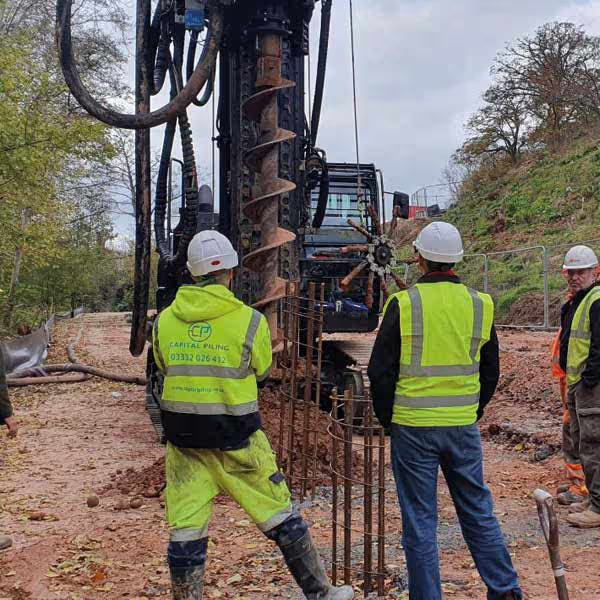
The piling contractor mobilises to site once the working platform has been constructed, services have been located and marked, and the site datum has been confirmed. The rig is set up and the concrete pump is positioned with clear access to each pile position across the working area. Setting out of pile positions from the coordinates on the piling drawings is completed before drilling begins, with positions marked and checked against the structural drawings.
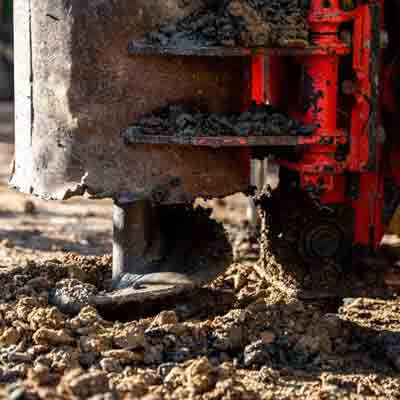
Installation proceeds pile by pile across the site. For each pile the rig positions over the marked location, the auger drills to the design depth in a single continuous pass, concrete pumping begins immediately at full depth and continues throughout auger withdrawal, and the reinforcement cage is placed into the wet concrete before the mix begins to stiffen. The monitoring system records the key installation parameters throughout and the data is reviewed by the site supervisor at the end of each pile before the rig moves to the next position.
Where the monitoring data raises a concern, the pile is flagged and reviewed with the structural engineer before a decision is made about whether to proceed, carry out integrity testing, or install a replacement pile. This process runs continuously throughout the installation programme and is what allows quality issues to be identified and resolved during the works rather than after completion.
Once all piles are installed and have reached sufficient strength, pile head cropping begins. Each pile head is broken down to the level shown on the structural drawings, laitance and poor quality concrete are removed, and the projecting reinforcement is exposed ready for the ground beam or slab construction above. Installation records for all piles are compiled and submitted to the structural engineer or warranty body as required by the contract.
How the installation process adapts to different project types and site conditions
On a small residential project the installation programme may span a single day or two, with a compact rig, a straightforward pile layout, and a modest concrete volume. The process is the same as on a larger project but the scale is different and the logistics are simpler. On a large residential development or commercial scheme the programme may run for several weeks, with multiple rig positions, a high daily output of piles, and a more complex concrete supply and spoil management operation.
On constrained urban sites the installation process requires more careful management of access, working space, and the movement of plant and materials around the site. Where piling is being carried out in close proximity to existing structures or live buildings, additional precautions around vibration monitoring, working hours, and neighbour communication may be required. These are project specific considerations that the piling contractor and main contractor should work through together during the pre-construction stage.
The standards and documentation that govern CFA piling installation
CFA piling installation in the UK is carried out in accordance with BS EN 1536, the British and European standard for the execution of bored piles. This standard sets out the requirements for pile installation, monitoring, recording, and testing, and defines the tolerances within which piles must be installed in terms of position, level, and verticality.
For residential projects subject to NHBC Building Control or Buildmark warranty, Chapter 4.4 of the NHBC Standards sets out additional requirements specific to piled foundations, including the information that must be submitted before the foundation works are accepted. On commercial projects the contractual requirements for installation standards, records submission, and testing are typically defined in the specification issued by the structural engineer or employer's agent.
Installation records for every pile, integrity testing results where applicable, and any deviation notices for piles installed outside tolerance are all compiled into a foundation completion document that forms part of the permanent record for the building. This document is important not just for the current construction but for any future works involving the foundation, and it should be retained by the client or building owner as part of the building's technical documentation.
What to think about when planning and managing a CFA piling installation contract
The single biggest factor in a smooth CFA piling installation is the quality of the pre-construction planning. Sites that are properly prepared, with a solid working platform, located services, confirmed setting out, and a reliable concrete supply in place before the rig arrives, run efficiently and produce consistent results. Sites where these things are picked up on the day cause delays, frustration, and in some cases quality problems that are difficult and expensive to resolve.
Programme coordination between the piling contractor, the main contractor, and the structural engineer during the works is equally important. Decisions about pile anomalies, changes to the layout, and the timing of pile head cropping and ground beam construction all need to be made promptly and with input from the right people. Delays in decision making have a way of compounding quickly on a piling contract where the rig is standing waiting for an instruction.
For projects where the foundation package includes ground beams and RC slabs as well as piling, having a single contractor responsible for the full sequence removes a significant amount of the coordination burden from the main contractor and reduces the risk of programme gaps between piling completion and groundworks commencement. It also means that the pile specification, the ground beam design, and the slab layout have been developed together from the outset, which is the most reliable way to ensure they all work as an integrated foundation system rather than as three separate elements that happen to be in the same location.