Two similar methods with some important differences
CFA piling and SFA piling are both bored, cast in-situ foundation methods that produce reinforced concrete piles. To the untrained eye the finished result looks broadly the same, and both methods share a number of advantages including low noise, low vibration, and suitability for urban and residential environments. However the way each method installs the pile is fundamentally different, and those differences have a real bearing on which one is appropriate for your site, your ground conditions, and your project constraints.
Understanding the distinction between the two helps ensure the right method is specified from the outset rather than having to reconsider part way through the design or installation process.
The core differences between CFA and SFA piling
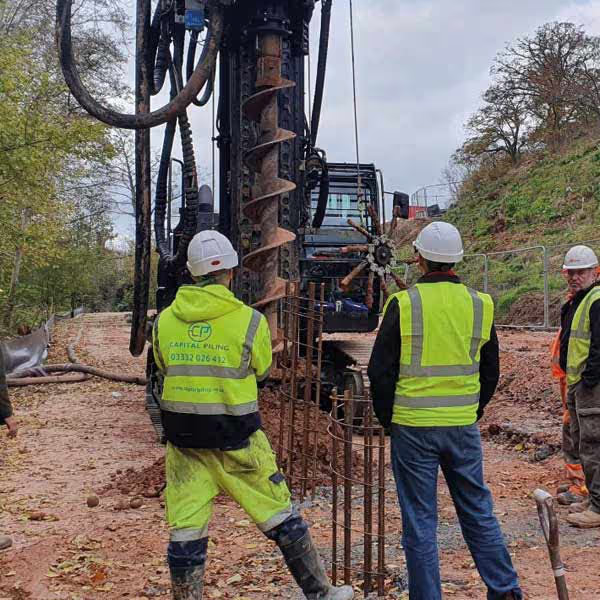
CFA piling uses a continuous auger with a hollow stem, drilling to the full design depth in one uninterrupted pass before pumping concrete through the stem under pressure as the auger is withdrawn. The bore is never left open at any point. SFA piling uses a sectional flight auger to drill an open bore to the design depth, after which the auger is removed, a reinforcement cage is placed, and concrete is poured into the open bore to complete the pile.
The fundamental distinction is that CFA relies on pressurised concrete to support and fill the bore during withdrawal, whereas SFA relies on the ground being stable enough to maintain an open bore during the window between drilling and concreting. This single difference is what determines which method is appropriate in a given set of ground conditions.
CFA equipment is typically larger and requires more working space and a continuous concrete supply on site. SFA equipment is sectional, meaning it can be broken down into smaller components and reassembled on site, making it more practical in restricted access locations, low headroom environments, and confined urban plots.
How the installation process differs between the two methods
In CFA piling the auger is rotated continuously into the ground to the design depth without stopping. Once at depth, concrete pumping begins immediately through the hollow stem and the auger is withdrawn at a steady controlled rate with concrete filling the bore from the bottom up under pressure. The reinforcement cage is then placed into the fresh concrete before it begins to stiffen. The entire sequence from drilling to cage placement happens without the bore ever being left open or unsupported.
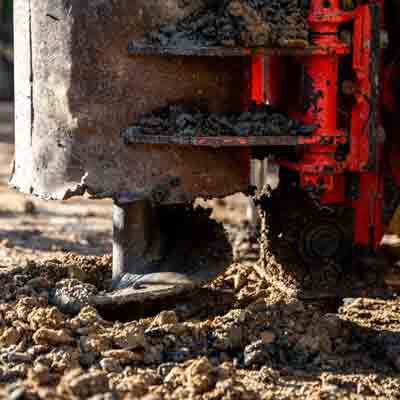
In SFA piling the sectional auger is assembled in sections as it advances into the ground, drilling to the required depth and removing soil as it goes. Once at depth the auger is withdrawn and the bore is left open temporarily. The reinforcement cage is lowered into the open bore and concrete is then poured from the top to fill it. This open bore phase is where the ground conditions become critical. If the soil cannot maintain the bore walls unsupported during this window, the bore can collapse before or during concreting, which affects pile quality and integrity.
Choosing between CFA and SFA based on your site and ground conditions
CFA piling is generally the preferred method on larger open sites where a full size rig can operate freely, where programme efficiency is important, and where ground conditions include loose sands, gravels, or soils below the water table that would not maintain a stable open bore. It is widely used across residential developments, commercial schemes, and urban construction projects throughout the UK.
SFA piling comes into its own on constrained sites where the sectional equipment can be broken down to access tight spaces, low headroom environments, or locations inside existing buildings. It is particularly well suited to cohesive soils such as firm to stiff clays where the bore will remain stable during the open bore phase. On projects where access restrictions make a full CFA rig impractical, SFA is often the most sensible and cost effective solution.
The technical factors that separate the two methods
CFA rigs require a continuous concrete pump operating throughout the auger withdrawal phase, which means concrete logistics need to be planned carefully to avoid any interruption in supply. The monitoring systems fitted to modern CFA rigs record withdrawal rate, rotation speed, concrete volume, and pump pressure in real time, producing an installation record for every pile.
SFA equipment, being sectional, can be configured to suit different headroom and access constraints. Pile diameters and achievable depths are broadly comparable across both methods, though CFA rigs generally have greater torque output and can achieve larger diameters more efficiently. In terms of spoil management, SFA produces arisings from the open bore that need to be managed and disposed of on site, whilst CFA also produces spoil on the auger flights during drilling, though the volume and handling requirements are similar for both.
What to think about before choosing between CFA and SFA
The choice between CFA and SFA should never be made on cost alone or based on which equipment a contractor happens to have available. It should be driven by the ground investigation data, the site constraints, and the structural requirements of the project. Specifying CFA on a site where the rig cannot operate safely, or specifying SFA on ground where the bore will not remain stable, creates problems that are far more expensive to resolve on site than they would have been to avoid at the design stage.
Capital Piling's in house design team works through exactly these decisions as part of our design service. We assess the ground investigation data, review the site constraints, and recommend the most appropriate method for your specific project. If you are unsure which method is right for your site, getting that advice early is the most straightforward way to make sure the design and the installation align from the start.