Matching Ground Conditions to Structural Requirements
Choosing the right foundation type is one of the most important decisions in any construction project, as it determines how the building loads are transferred into the ground. The selection process depends on soil conditions, structural loads, site constraints, and long-term performance requirements.
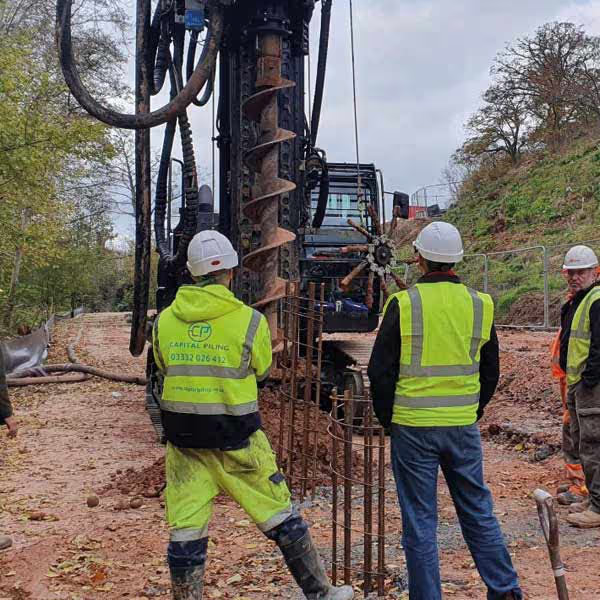
Different foundation systems, such as shallow foundations, piled foundations, or ground improvement solutions, are used depending on how suitable the ground is for supporting the structure. Each option has different strengths and limitations.
At a high level, foundation selection ensures that the structure is safely supported while remaining cost-effective and suitable for the specific site conditions.
Factors That Influence Foundation Selection
Soil strength and ground conditions are the primary factors in determining foundation type. Weak or variable soils often require deeper solutions such as piling, while strong, stable soils may support shallow foundations.
Structural load requirements also play a major role, as heavier buildings require more robust systems capable of transferring higher loads safely into the ground.
Site constraints such as access, nearby structures, groundwater levels, and existing services can also influence the choice of foundation system.
From Site Assessment to Foundation Design
The process begins with a ground investigation, which provides data on soil composition, strength, and groundwater conditions. This information is used by structural engineers to assess suitable foundation options.
Engineers then compare different foundation systems and select the most appropriate solution based on performance, safety, and cost considerations. This may include piles, ground beams, raft foundations, or shallow footings.
Once selected, the foundation design is detailed in drawings and specifications, which guide the construction process on site.
Applied at the Start of Every Construction Project
Foundation selection takes place during the early design stage of all construction projects, before any groundworks or excavation begins. It is essential for both small residential builds and large commercial or infrastructure developments.
It is particularly critical on sites with uncertain or poor ground conditions, where incorrect foundation selection could lead to structural failure or excessive settlement.
This process is used universally across construction projects because every structure requires a stable and appropriate foundation system.
Engineering Considerations in Foundation Design
Foundation design is based on geotechnical data such as bearing capacity, soil stiffness, and settlement characteristics. These parameters determine how loads will be transferred into the ground.
Structural analysis is used to calculate load paths, ensuring that the chosen foundation system can safely support vertical, horizontal, and dynamic forces.
Design codes and regulations also influence foundation selection, ensuring compliance with safety standards and long-term durability requirements.
Risk, Cost, and Constructability
Choosing the correct foundation type requires balancing structural safety, construction feasibility, and project cost. Over-engineering can increase costs, while under-designing can lead to structural issues.
Constructability is also important, as some foundation types may be difficult to install depending on site access, equipment availability, or environmental conditions.
Ultimately, the right foundation choice ensures that the building is safe, durable, and efficient to construct while adapting appropriately to the ground conditions on site.