Other Servces
Overview
Key Points
How It Works
When & Where It’s Used
Technical Details
Considerations
Contact information
Role of Concrete in CFA Pile Formation
In CFA (Continuous Flight Auger) piling, concrete or grout is the primary material used to form the structural body of the pile. It is pumped through the hollow stem of the auger during extraction, filling the void created in the ground and forming a continuous in-situ foundation element.
The quality of the concrete mix is critical, as it must be workable enough to flow under pressure while maintaining the strength required for structural performance. Consistency and control during placement are essential to ensure the pile is fully formed without defects.
At a high level, concrete quality and QA records work together to confirm that each pile has been constructed correctly and meets the required design and specification standards.
Importance of Concrete Mix and Placement Control
The concrete used in CFA piling must be carefully designed to achieve both pumpability and structural strength. It needs to flow smoothly through the auger system while maintaining stability once placed in the ground.
During installation, the continuous pumping of concrete must match the rate of auger extraction to ensure the bore remains fully filled at all times. Any imbalance can affect pile integrity and lead to voids or defects.
Because CFA piles are formed below ground and not visually inspected during construction, quality assurance of concrete placement is critical to ensuring design compliance.
Concrete Placement Through Continuous Pumping
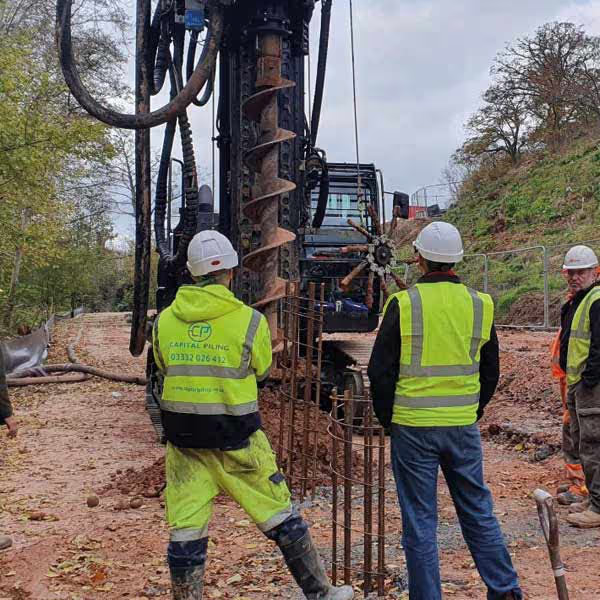
Once the auger reaches the required depth, concrete or grout is pumped through its hollow stem under controlled pressure. As the auger is gradually withdrawn, the concrete fills the space left behind, forming the pile shaft.
This process must remain continuous to prevent collapse of the bore or interruption in the pile formation. The pressure and volume of concrete are closely monitored to ensure full displacement of soil and proper pile formation.
After concreting, reinforcement is inserted into the fresh concrete where required, completing the structural element of the pile.
Applications Requiring High Integrity Foundation Elements
CFA piling with controlled concrete placement is used on projects where reliable load transfer and consistent pile quality are essential. This includes residential, commercial, and infrastructure developments with structural load requirements.
It is particularly important in urban environments where piles must be installed efficiently without vibration or noise, while still maintaining strict quality standards.
The method is also widely used in variable ground conditions, where consistent concrete placement helps ensure pile integrity even when soil conditions change during installation.
QA Records and Installation Monitoring
Quality assurance in CFA piling is supported by detailed records collected during installation. These typically include data on auger depth, extraction rate, concrete pressure, and volume placed per pile.
Modern piling rigs often use automated monitoring systems that record this data in real time, providing a complete digital log for each pile installed. This allows engineers to verify that installation parameters remained within specified tolerances.
These QA records form part of the project documentation and are used to confirm compliance with design specifications, building regulations, and client requirements.
Ensuring Consistency and Compliance During Installation
The performance of CFA piles is highly dependent on maintaining consistent concrete flow and pressure throughout the installation process. Any interruption in pumping can affect pile integrity and structural performance.
Ground conditions can also influence concrete behaviour, particularly in unstable or water-bearing soils where maintaining bore stability is more challenging. Proper control of installation parameters helps mitigate these risks.
Ultimately, QA records and concrete control provide the assurance that CFA piles have been constructed correctly, making them a critical part of the overall quality and safety process.