Preparing the Ground Around Piled Foundation Systems
Excavation is a key stage of groundworks that often takes place before, during, or after piling activities, depending on the foundation design and construction sequence. It involves removing soil to create the required levels and access for foundation elements such as pile caps, ground beams, and reinforced concrete slabs.
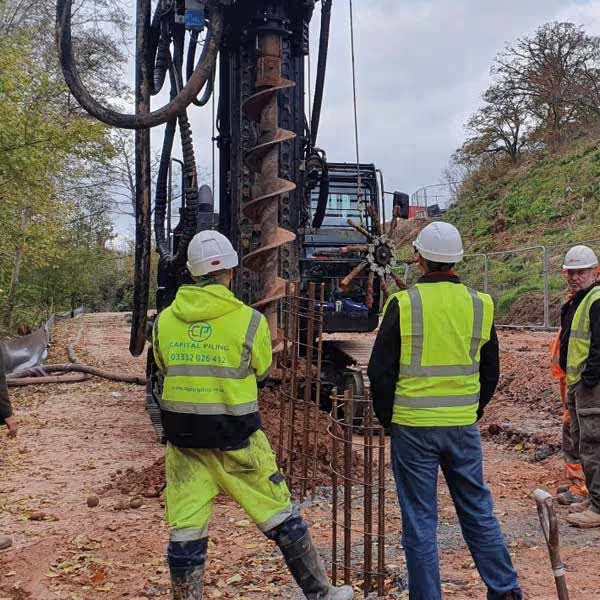
In piled foundation projects, excavation is typically more focused than in traditional shallow foundation systems, as the primary load-bearing elements extend deep into the ground. The excavation works are generally carried out to expose pile heads, form foundation connections, and prepare areas for subsequent structural construction.
At a high level, excavation helps create the space needed to integrate piles with the wider foundation system and establish the correct formation levels across the site.
Supporting the Construction of Foundation Elements
Excavation is commonly used to create trenches for ground beams, recesses for pile caps, and formation areas for floor slabs. These excavations allow the various foundation components to be constructed and connected to the installed piles.
The depth and extent of excavation depend on the project design, site levels, and foundation arrangement. Some projects may require only localised excavation around pile positions, while others involve larger-scale earthworks across the site.
Accurate excavation is important because foundation elements must be constructed at the correct levels and locations to ensure effective load transfer throughout the structure.
Creating Access to Pile Heads and Foundation Zones
Following pile installation, excavation may be carried out to expose pile heads and prepare areas where pile caps or ground beams will be constructed. This process allows the piles to be incorporated into the final foundation layout.
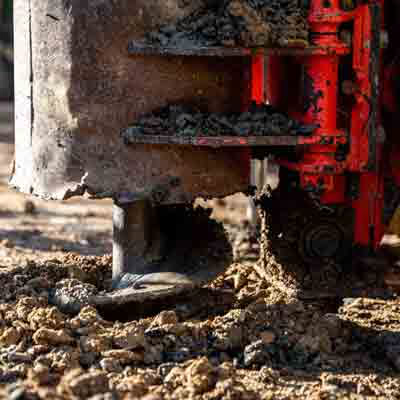
The excavation is undertaken in accordance with the engineering drawings, ensuring that formation levels and dimensions match the design requirements. Material removed during excavation is managed through site spoil handling and disposal procedures.
Once excavation is complete, construction of pile caps, ground beams, reinforcement, and other structural foundation elements can proceed.
A Common Stage in Piled Foundation Construction
Excavation for piled foundations is used across residential, commercial, industrial, and infrastructure projects where deep foundation systems have been selected. It forms a critical link between pile installation and the construction of the supporting structural elements above.
The process is particularly important where pile caps and ground beams are required, as these elements generally need excavated spaces to allow for reinforcement placement and concrete construction.
Excavation may also be required on sloping sites or developments where significant level changes must be accommodated within the foundation design.
Levels, Dimensions, and Ground Conditions
Excavation works are carried out to dimensions specified by the engineering design and are influenced by factors such as pile cap size, beam depth, and slab formation levels. Maintaining these dimensions is essential for structural accuracy.
Ground conditions can affect excavation methods and sequencing. Factors such as groundwater, unstable soils, and existing services may require additional control measures to maintain safety and excavation stability.
Survey control is typically used throughout the process to verify depths, locations, and formation levels before foundation construction begins.
Safety, Stability, and Coordination
Excavations must be planned and managed carefully to ensure the safety of personnel and the stability of surrounding ground. Temporary support measures may be required where deeper excavations or challenging ground conditions are encountered.
Coordination between excavation works, piling operations, and structural construction is important to avoid delays and ensure that each phase progresses in the correct sequence.
Ultimately, excavation for piled foundations provides the access and formation needed to connect piles with the wider foundation system, supporting the successful construction of the structure above.