Creating a Safe Environment Before Foundation Works
Health and safety is a fundamental part of site preparation, ensuring that the construction site is ready for piling and foundation works without exposing workers, visitors, or the public to unnecessary risk. Before any construction activities begin, hazards should be identified, control measures established, and safe working procedures implemented.
Effective health and safety planning helps reduce accidents, protects equipment and infrastructure, and supports efficient project delivery. It also ensures that everyone working on site understands their responsibilities and follows agreed safety procedures.
At a high level, health and safety considerations create a controlled working environment where foundation works can be carried out safely and responsibly.
Identifying and Managing Site Risks
Before piling begins, potential hazards such as underground services, overhead utilities, unstable ground, excavations, and heavy plant movements should be identified and assessed. Understanding these risks allows appropriate control measures to be put in place.
Safe access routes, exclusion zones, site signage, and designated work areas help separate construction activities and reduce the risk of incidents involving personnel or equipment.
Regular communication between contractors, engineers, and site management helps ensure that safety remains a priority throughout the preparation and construction phases.
Implementing Safe Working Procedures
Health and safety planning begins with site-specific risk assessments and the development of safe systems of work. These documents identify potential hazards and outline the procedures required to manage them effectively.
Before work starts, site personnel receive safety briefings and are made aware of emergency procedures, access arrangements, and any project-specific risks. Temporary works, working platforms, and access routes are also inspected to confirm they are safe for use.
Throughout the project, safety inspections and ongoing monitoring help ensure that control measures remain effective as site conditions and construction activities change.
Essential on Every Construction Project
Health and safety considerations apply to every stage of site preparation and foundation construction, regardless of project size or complexity. They are required on residential, commercial, industrial, and infrastructure developments.
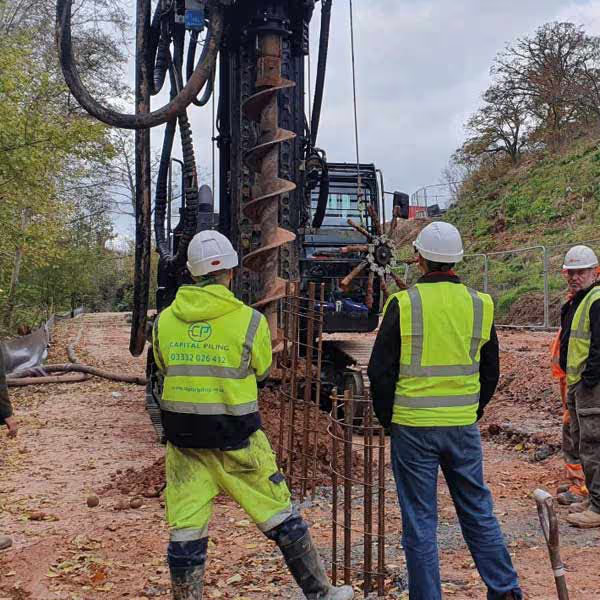
They are particularly important on sites involving heavy plant, piling rigs, excavations, confined working areas, or nearby occupied buildings where additional safety controls may be required.
Health and safety planning begins before work starts and continues throughout the entire construction programme.
Site Controls and Safety Management
Health and safety management includes establishing secure site boundaries, traffic management plans, emergency procedures, and safe access arrangements for both vehicles and pedestrians.
Risk assessments are reviewed as the project progresses, particularly if construction methods, equipment, or site conditions change. Inspections of working platforms, lifting operations, excavations, and temporary works help verify that safety standards are maintained.
Records of site inductions, inspections, and safety briefings are often maintained as part of the project's health and safety management system.
Maintaining a Strong Safety Culture
Health and safety is most effective when it is supported by clear communication and cooperation between the client, engineers, contractors, and site personnel. Reporting hazards promptly and following agreed procedures helps prevent incidents before they occur.
Good housekeeping, regular inspections, and effective supervision all contribute to maintaining a safe and organised working environment throughout the project.
Ultimately, prioritising health and safety during site preparation protects people, supports efficient construction, and provides a strong foundation for the successful delivery of piling and foundation works.