Recording the Piling Installation Process
Installation monitoring and records form an important part of quality assurance during piling works. Throughout the installation process, key information is recorded to demonstrate that each pile has been constructed in accordance with the approved design, project specifications, and construction procedures.
These records provide engineers, contractors, and clients with a documented history of the piling works, supporting quality control and assisting with project verification. They also provide valuable information should any technical queries arise during or after construction.
At a high level, installation monitoring ensures that piling operations are properly documented and that the completed foundation system can be verified against the project requirements.
Capturing Construction Information
During pile installation, a range of information may be recorded, including pile location, installation date, pile dimensions, depth achieved, concrete or grout quantities, reinforcement details, and any significant observations made during construction.
Monitoring these details helps confirm that each pile has been installed in accordance with the approved drawings and allows engineers to review the completed work against the design requirements.
Accurate record keeping also supports communication between the piling contractor, structural engineer, and client throughout the project.
Monitoring Installation from Start to Finish
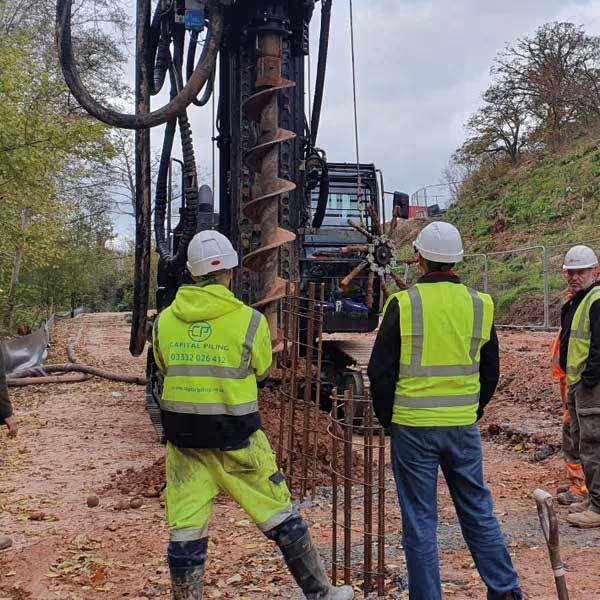
The monitoring process begins as each pile is installed, with site personnel recording key construction data using site logs, digital recording systems, or project documentation. Information is collected throughout the installation rather than only after the work has been completed.
Once the pile has been constructed, the recorded information is reviewed alongside quality assurance procedures, engineering inspections, and any testing undertaken as part of the project specification.
The completed records are then compiled into the project documentation, providing a permanent record of the installed foundation system.
Standard Practice on Piling Projects
Installation monitoring is carried out on residential, commercial, industrial, and infrastructure projects involving piled foundations. It forms a routine part of the construction process regardless of the piling method being used.
It is particularly important on projects requiring detailed quality assurance documentation, engineering verification, or regulatory compliance.
The records are created throughout the installation process and are often included within the project's final handover information.
Quality Assurance Documentation
Installation records may include pile reference numbers, coordinates, pile diameter, installation depth, reinforcement information, concrete or grout volumes, installation times, and observations relating to ground conditions encountered during construction.
Depending on the piling method and project requirements, additional information such as equipment data, installation parameters, testing results, and survey records may also be documented.
These records are reviewed alongside engineering drawings and project specifications to confirm that the completed works comply with the approved design.
Accuracy and Long-Term Traceability
Installation records should be completed accurately and maintained throughout the project to provide a reliable history of the piling works. Consistent documentation helps identify any issues early and supports effective communication between all members of the project team.
Where unexpected ground conditions or construction variations are encountered, these should be recorded and brought to the attention of the project engineer so that any necessary reviews can be carried out.
Ultimately, comprehensive installation monitoring and accurate record keeping provide confidence in the quality of the completed piling works and form an essential part of the project's engineering and quality assurance process.