Other Servces
Overview
Key Points
How It Works
When & Where It’s Used
Technical Details
Considerations
Contact information
Sequential Formation of CFA Piles
The installation of CFA (Continuous Flight Auger) piles follows a controlled, step-by-step process designed to create a continuous in-situ concrete pile with minimal disturbance to the surrounding ground. Each stage of the process is critical to ensuring the pile achieves its intended structural performance.
Unlike driven piling methods, CFA piling relies on continuous drilling and simultaneous concrete placement, which allows the pile to be formed without the need for casing in most ground conditions. This makes the process efficient and suitable for a wide range of sites.
At a high level, the installation process is designed to maintain bore stability, ensure accurate depth control, and achieve consistent concrete integrity throughout the full length of the pile.
Core Stages That Define CFA Installation
The CFA piling process typically follows a sequence of drilling, concreting, and reinforcement placement. Each stage must be completed in a controlled manner to ensure the integrity of the finished pile.
Maintaining continuous auger penetration is essential, as it supports the surrounding soil and prevents collapse of the bore during installation. This is particularly important in weaker or variable ground conditions.
Timing is also critical, as reinforcement must be installed immediately after concrete placement to ensure correct embedment and structural continuity.
Step-by-Step Installation Sequence
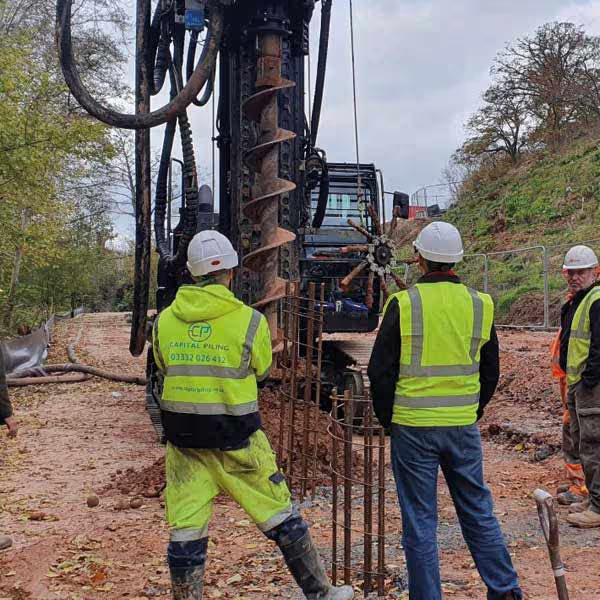
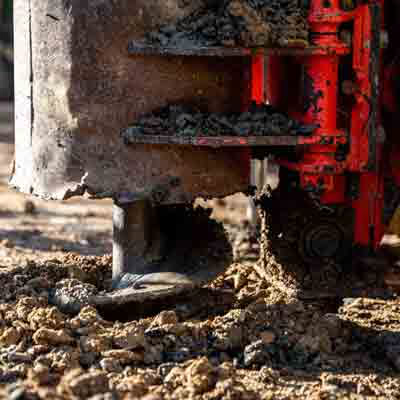
The process begins with positioning the piling rig over the required pile location and aligning it according to design coordinates. Once in position, the continuous flight auger is rotated and driven into the ground to the specified depth.
As the auger is withdrawn, concrete is pumped through its hollow stem under pressure, filling the void created during drilling. This ensures the bore remains fully supported and prevents collapse during extraction.
After concrete placement, a prefabricated reinforcement cage is inserted into the fresh concrete. The cage is carefully lowered to the correct depth to ensure it is fully embedded and aligned with the structural design requirements.
Applications Requiring Controlled Deep Foundation Installation
The CFA piling process is widely used on projects where deep foundations are required and where ground conditions allow for continuous drilling without excessive obstruction or instability.
It is commonly used in residential and commercial developments, particularly in urban environments where vibration and noise must be minimised during construction.
The method is also suitable for sites with variable soil conditions, as the step-by-step installation process allows adaptation to changing ground resistance during drilling.
Control Parameters During Installation
Several technical factors are monitored throughout the CFA installation process, including auger depth, rotation speed, and extraction rate. These parameters ensure that the pile is formed to the correct specifications.
Concrete pressure and volume are also carefully controlled during pumping to ensure the bore remains fully filled and free from voids. This is critical for maintaining structural integrity.
Digital monitoring systems on modern piling rigs often record installation data in real time, providing traceability and quality assurance for each pile installed.
Factors Affecting Installation Performance
Ground conditions play a significant role in the ease and success of CFA pile installation. Highly unstable soils, groundwater ingress, or obstructions can affect drilling efficiency and concrete placement.
Coordination between drilling and reinforcement insertion is essential, as delays can impact concrete setting and reduce the effectiveness of the structural bond.
Accurate positioning and monitoring throughout the installation process are critical to ensuring the finished pile meets both design tolerances and performance requirements.