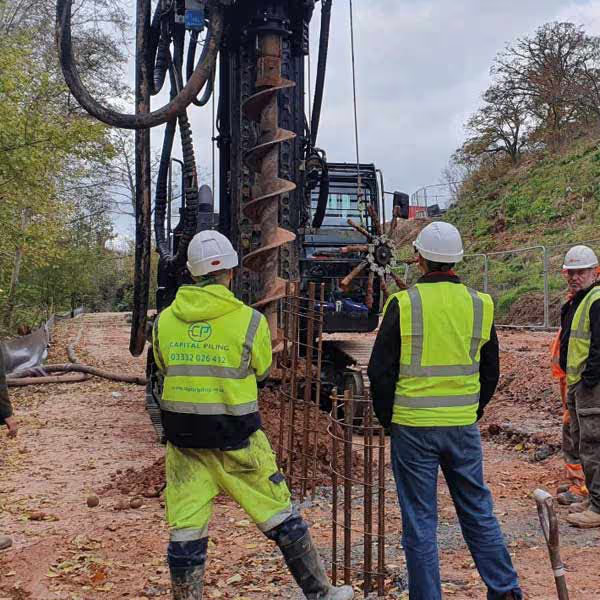
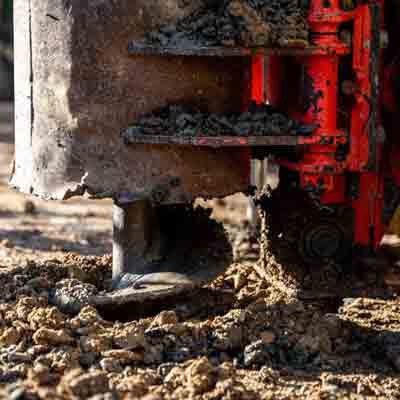
Understanding How Piles Support Structures
The load capacity of a pile refers to the amount of structural load it can safely transfer from a building into the surrounding ground. It is one of the most important considerations in foundation design, helping engineers determine the size, depth, and number of piles required for a project.
The load capacity of a pile depends on several factors, including the ground conditions, pile dimensions, installation method, and the type of loading applied. Every pile is designed to work as part of the overall foundation system rather than in isolation.
At a high level, load capacity ensures that piles are capable of supporting the intended structure safely while limiting excessive settlement or movement.
Factors That Influence Load Capacity
The strength and characteristics of the ground have a significant influence on how much load a pile can support. Dense soils and strong rock generally provide greater resistance than softer or more compressible ground.
Pile diameter, length, and installation method also affect load capacity, as these determine how effectively the pile transfers forces into the surrounding soil or rock.
Structural engineers consider both the loads imposed by the building and the properties of the ground when designing a suitable piled foundation system.
Transferring Loads into the Ground
When a building applies weight to its foundations, the load is transferred through pile caps or ground beams into the piles below. The piles then distribute these forces into the surrounding ground through a combination of end bearing at the pile tip and friction along the pile shaft, depending on the design and ground conditions.
Engineers calculate the required load capacity for each pile based on the structural design and information from the ground investigation. The pile dimensions and layout are then selected to ensure the foundation performs as intended.
During construction, quality assurance procedures and, where specified, pile testing may be used to verify that the installed piles meet the design requirements.
A Fundamental Part of Foundation Design
Load capacity is considered on every project involving piled foundations, including residential, commercial, industrial, and infrastructure developments.
It is particularly important where buildings impose significant structural loads or where poor ground conditions require foundations to transfer loads to stronger strata at greater depths.
The required load capacity is established during the design stage and guides both the pile specification and construction process.
Engineering Assessment and Verification
Engineers determine pile load capacity using information from ground investigations, structural loading calculations, and recognised geotechnical design methods. Factors such as soil strength, groundwater conditions, pile geometry, and settlement behaviour are all considered during the assessment.
Depending on the project requirements, the design may also consider compression, tension, and lateral loads acting on the piles, ensuring the foundation can safely resist all anticipated forces.
Where appropriate, pile load testing and construction records are used to confirm that the installed foundation system performs in accordance with the approved design.
Designing for Safety and Long-Term Performance
Accurate assessment of pile load capacity depends on reliable ground investigation data and careful engineering design. Variations in ground conditions across a site may influence the required pile dimensions or layout.
Close collaboration between geotechnical engineers, structural engineers, and piling contractors helps ensure that the selected foundation solution is appropriate for the project and can be constructed effectively.
Ultimately, understanding the load capacity of piles is essential for designing foundations that safely support the structure, minimise settlement, and provide reliable long-term performance.