Getting Residential Sites Ready for Foundation Works
Preparing a small residential site for piling involves creating a safe, accessible, and organised working environment before foundation installation begins. Although residential projects are generally smaller than commercial developments, they still require careful planning to accommodate piling equipment, materials, and construction activities.
Preparation focuses on ensuring the site can safely support piling operations while minimising disruption to neighbouring properties and existing structures. The exact requirements depend on site access, ground conditions, and the selected piling method.
At a high level, residential site preparation provides the conditions needed for efficient piling works while maintaining safety and protecting the surrounding environment.
Planning for Limited Space and Access
Small residential sites often have restricted access, making careful planning essential before piling equipment arrives. Access routes, delivery areas, and working spaces should be organised to allow machinery to operate safely within the available space.
The site should be cleared of unnecessary vegetation, debris, and temporary obstacles that could interfere with piling activities. Existing utilities and underground services should also be identified before work begins.
Good preparation helps reduce disruption, improves construction efficiency, and allows foundation works to progress smoothly.
Preparing the Site Before Equipment Arrives
Preparation typically begins with a site survey to assess access, ground levels, and any constraints that could affect piling operations. Based on this assessment, the site is cleared and suitable access routes are established.
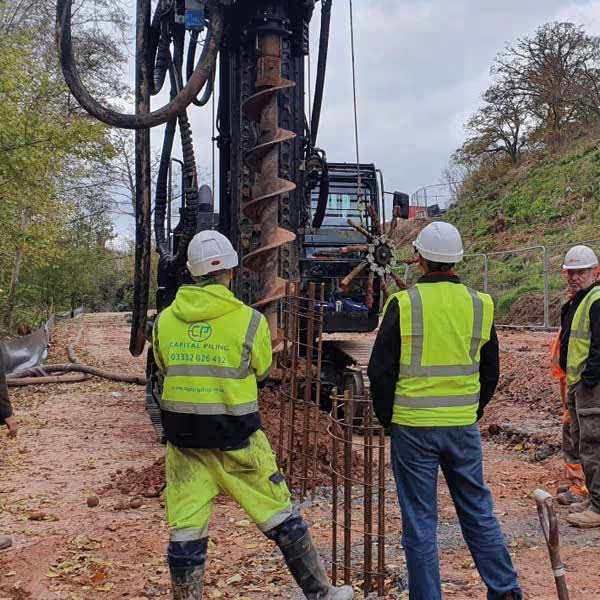
Where required, a temporary working platform or reinforced access area is constructed to support piling equipment. Surveyors then set out the pile locations using the approved structural drawings.
Once the site has been prepared and all safety measures are in place, the piling contractor can mobilise equipment and begin foundation installation.
Ideal for House Extensions and New Homes
Preparing small residential sites is required for projects such as new-build houses, home extensions, garages, garden rooms, and other domestic developments where piled foundations have been specified.
It is particularly important on properties with restricted access, neighbouring buildings, sloping ground, or poor soil conditions that require specialist foundation solutions.
Careful preparation helps ensure that piling works can be completed safely while minimising inconvenience to homeowners and nearby residents.
Access, Ground Conditions, and Utility Checks
Residential site preparation includes assessing ground bearing capacity, access widths, overhead clearances, and working space for piling equipment. These factors influence the choice of piling method and equipment size.
Underground services such as water, gas, electricity, and drainage should be identified before excavation or piling begins to reduce the risk of accidental damage.
Survey control and accurate setting out ensure that piles are installed in the correct locations and align with the approved foundation design.
Protecting the Property and Surroundings
On residential projects, particular care should be taken to protect neighbouring properties, boundary walls, landscaping, and existing structures throughout the preparation and piling process.
Noise, dust, vehicle movements, and material storage should be managed carefully to minimise disruption in occupied residential areas. Maintaining clear communication with homeowners and neighbours can also help the project run more smoothly.
Ultimately, thorough preparation of a small residential site creates a safe and efficient environment for piling works, supporting a successful foundation installation with minimal impact on the surrounding area.