Other Servces
Overview
Key Points
How It Works
When & Where It’s Used
Technical Details
Considerations
Contact information
Planning CFA Piling Operations on Site
Programme planning and site set-up are critical stages in CFA (Continuous Flight Auger) piling works, as they determine how efficiently the piling operation can be delivered on site. Because CFA piling involves continuous drilling, concrete pumping, and spoil removal, careful coordination is required before any installation begins.
Effective planning ensures that access routes, plant positioning, and material logistics are all considered in advance. This helps reduce delays, improve productivity, and ensure that piling works integrate smoothly into the wider construction programme.
At a high level, successful CFA piling delivery depends on aligning technical requirements with practical site constraints from the earliest planning stage.
Coordinating Access, Plant, and Logistics
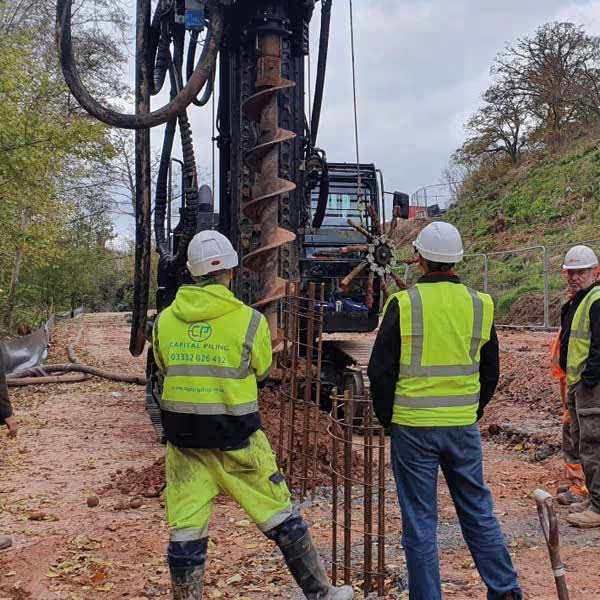
CFA piling requires sufficient access for specialist rigs, concrete supply vehicles, and spoil removal equipment. Site set-up must therefore account for working space, ground bearing capacity, and safe movement of plant during operations.
The positioning of the piling rig is particularly important, as it must be able to reach all pile locations without excessive repositioning. Poor layout planning can significantly impact productivity and programme efficiency.
Material logistics, including concrete supply and spoil handling, must also be coordinated to ensure continuous operation without interruptions during drilling and concreting.
Establishing an Efficient Working Platform
Before piling begins, a suitable working platform is prepared to support the weight and operation of the CFA rig. This platform must be designed to provide stable, level access for heavy plant while maintaining safety under load.
Once the platform is in place, pile locations are set out according to the design drawings, ensuring accurate positioning for structural alignment. This step is essential to maintain compliance with design tolerances.
Site set-up also includes defining storage areas for reinforcement cages, spoil management zones, and concrete delivery access points to support continuous operations.
Sites Requiring Structured Construction Planning
Programme planning and site set-up are essential on all CFA piling projects, but they become especially important on constrained or urban sites where space is limited and multiple trades are operating simultaneously.
They are also critical on larger developments where piling forms part of a phased construction programme, requiring coordination with earthworks, foundations, and structural contractors.
In projects with tight deadlines, effective planning ensures that piling works are delivered efficiently without disrupting the overall construction sequence.
Ground and Equipment Requirements for Setup
The design of the working platform is influenced by ground conditions, anticipated rig loads, and pile layout density. Weak or variable ground may require additional stabilization to support piling operations safely.
Rig specifications, including reach, torque, and mast height, must be matched to site constraints to ensure all pile positions can be accessed efficiently. This reduces unnecessary repositioning and improves installation consistency.
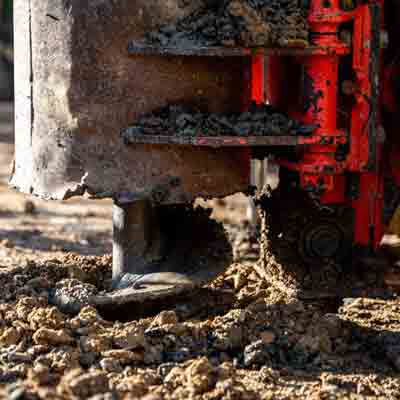
Programme planning also considers concrete supply rates and spoil removal capacity, ensuring that installation can proceed continuously without logistical bottlenecks.
Managing Constraints and Site Efficiency
Poor site set-up can significantly affect productivity, leading to delays, increased costs, and inefficient plant movement. Early planning is therefore essential to avoid operational disruptions during CFA piling works.
Weather conditions, ground stability, and site congestion can all influence the effectiveness of the working platform and access routes. These factors must be considered when designing the site layout.
Ultimately, successful CFA piling delivery relies on integrating technical design with practical site logistics to ensure a safe, efficient, and well-coordinated construction process.