Choosing the Most Suitable Foundation Solution
Selecting the correct piling method is an important part of foundation design, ensuring that the chosen technique is appropriate for the ground conditions, structural requirements, and site constraints. Different piling methods are designed to suit different types of projects, and no single solution is suitable for every site.
The selection process considers factors such as soil conditions, building loads, available working space, access restrictions, environmental considerations, and construction programme. By evaluating these factors together, engineers can recommend the most appropriate piling solution.
At a high level, selecting the correct piling method helps deliver a safe, efficient, and cost-effective foundation that meets the needs of the project.
Matching the Method to the Site
Ground conditions are one of the most significant factors when selecting a piling method. The strength of the soil, groundwater levels, and the depth of competent bearing strata all influence which foundation solution is most appropriate.
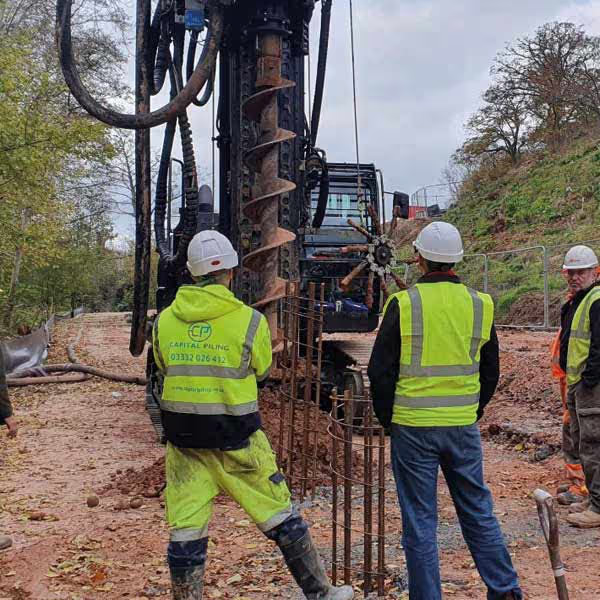
Site constraints are equally important. Limited access, nearby buildings, overhead restrictions, noise requirements, and available working space can affect both the type of piling equipment that can be used and the installation method.
The selected piling method should also align with the structural design, construction programme, and practical requirements of the project.
Assessing the Project Requirements
The process begins with reviewing the structural drawings and ground investigation report to understand the site's geotechnical conditions and the loading requirements of the proposed structure.
Engineers then compare the characteristics of different piling methods, considering their suitability for the ground conditions, construction constraints, and project objectives. Practical considerations such as access, equipment availability, spoil generation, and installation sequence are also evaluated.
Once the most suitable method has been identified, it is incorporated into the foundation design and construction programme, providing a clear basis for the piling works.
Applied During the Design Stage of Every Piling Project
The selection of a piling method takes place before construction begins on residential, commercial, industrial, and infrastructure developments that require piled foundations.
It is particularly important on sites with challenging ground conditions, restricted access, sensitive neighbouring structures, or complex foundation layouts where the choice of piling technique can significantly influence the construction process.
Making the correct selection early in the project helps reduce construction risks, improve efficiency, and support successful project delivery.
Engineering and Construction Considerations
The selection process considers factors including pile diameter, installation depth, structural loading, soil characteristics, groundwater conditions, and the interaction between the piling method and surrounding ground.
Construction considerations such as rig size, working platform requirements, temporary works, concrete supply, and quality assurance procedures are also reviewed to ensure the chosen method can be implemented effectively.
The final selection should satisfy both engineering requirements and site-specific constraints while supporting safe and efficient construction.
Balancing Performance, Practicality, and Cost
Choosing the correct piling method requires collaboration between structural engineers, geotechnical engineers, and the piling contractor to balance technical performance with practical site conditions.
Unexpected ground conditions or project changes may require the selected method to be reviewed before or during construction, making flexibility and ongoing communication important throughout the project.
Ultimately, selecting the correct piling method helps ensure that the foundation is appropriate for the site, supports the structure safely, and allows construction to be completed efficiently and in accordance with the project requirements.