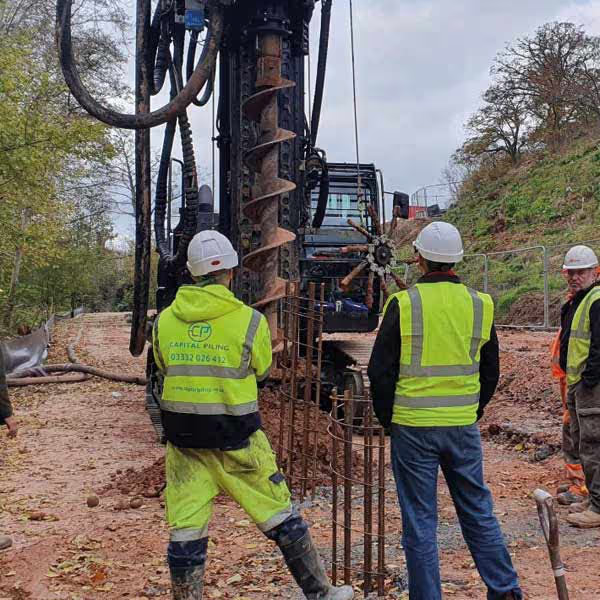
Establishing Accurate Locations for Foundation Installation
Setting out pile positions is the process of marking the exact locations where piles will be installed according to the approved engineering and structural drawings. It is one of the most important stages in the pre-construction process, as the accuracy of the entire foundation system depends on piles being installed in the correct locations.
The setting-out process ensures that foundation loads will be transferred as intended and that piles align with pile caps, ground beams, columns, and other structural elements. Any errors at this stage can affect subsequent construction activities and may require costly corrective measures.
At a high level, setting out provides the physical link between the design drawings and the actual construction work taking place on site.
Accuracy Is Critical to Foundation Performance
Pile positions must be established with a high degree of accuracy to ensure that the completed foundation system performs as designed. Correct positioning allows structural loads to be transferred efficiently through the piles and into the supporting ground.
The process also helps ensure that future foundation elements such as pile caps and ground beams can be constructed without modification or adjustment. Accurate setting out reduces the risk of clashes with other structural components.
Because piling is a permanent and largely concealed element of the structure, confirming pile locations before installation is essential to avoiding problems later in the construction programme.
Transferring Design Coordinates to the Site
The process begins by using survey control points that have been established across the site. These reference points provide a fixed framework from which pile locations can be measured and marked.
Survey equipment is then used to transfer coordinates from the engineering drawings onto the ground. Each pile position is identified and marked so that the piling contractor can accurately position the rig during installation.
Before piling begins, the marked locations are typically checked and verified to confirm that they correspond with the approved foundation layout and project requirements.
A Requirement for All Piling Projects
Setting out pile positions is required on all piling projects, regardless of the piling method, building type, or project scale. Every foundation design relies on accurately positioned piles to achieve the intended structural performance.
The process is especially important on projects with complex pile layouts, closely spaced foundations, or restricted site conditions where positional accuracy is critical.
It is commonly undertaken on residential, commercial, industrial, and infrastructure developments where piled foundations form part of the structural design.
Survey Control and Positional Tolerances
Setting out is typically carried out using survey instruments capable of establishing precise horizontal and vertical coordinates. These measurements are based on the approved site grid and foundation design information.
Positional tolerances are defined by the project specifications and engineering requirements. These tolerances help ensure that installed piles remain within acceptable limits relative to the intended design location.
Survey records may also be maintained as part of the quality assurance process, providing evidence that pile positions were established and checked before installation commenced.
Verification and Coordination Before Piling
Before piling starts, all pile locations should be reviewed against the latest drawings and site conditions to confirm that no conflicts or changes have occurred. Coordination between surveyors, engineers, and piling contractors is essential during this stage.
Existing services, site boundaries, temporary works, and access arrangements should also be considered when setting out pile positions, as these factors may influence construction activities.
Ultimately, accurate setting out helps ensure that piles are installed in the correct locations, providing the foundation system with the alignment and structural integrity required for the successful completion of the project.