Why site setup is one of the most overlooked parts of a successful piling operation
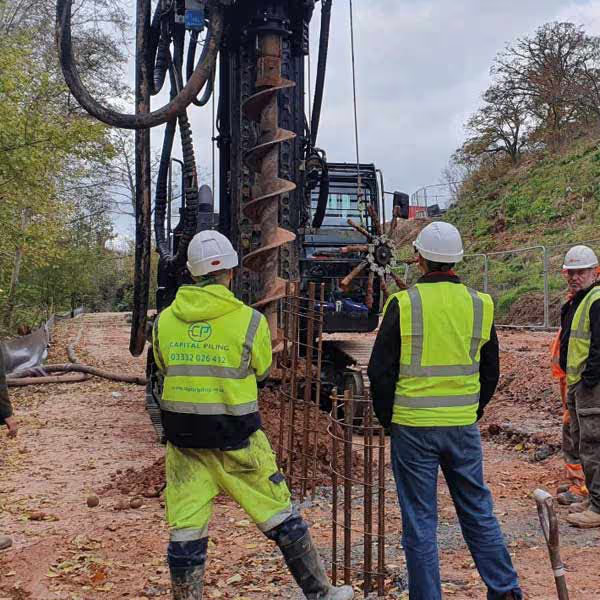
A CFA piling operation is only as smooth as the site it is working on. The quality of the pile design and the capability of the piling contractor count for very little if the site is not properly prepared before the rig arrives. Poor site setup leads to lost time, safety risks, equipment damage, and in some cases piles that cannot be installed in the right position because the working conditions do not allow it. Getting the site ready for piling is not complicated, but it does require careful thought and coordination in advance, and the responsibilities involved are shared between the main contractor, the client, and the piling contractor.
What needs to be in place before a CFA rig can begin work
The working platform needs to be level, stable, and capable of supporting the weight of the CFA rig and its associated plant. Underground services must be located, marked, and either isolated or protected before any drilling begins. Pile positions must be set out from a confirmed site datum before the rig arrives. Access routes to the site and between pile positions must be clear, of sufficient width, and capable of carrying the rig and support vehicles without risk of ground failure beneath them. A continuous concrete supply must be arranged and confirmed before installation starts, because any interruption in concrete delivery during auger withdrawal directly affects pile integrity.
What good site setup looks like in practice
The working platform is the foundation on which the entire piling operation sits, literally and figuratively. For a CFA rig, the platform needs to be designed and constructed in accordance with the guidance set out in the CIRIA document on piling platform design. This typically involves a granular fill layer of sufficient depth and compaction to distribute the rig loads without excessive settlement or instability. The platform must also be graded to allow surface water to drain away from the working area, as standing water on the platform surface creates both safety risks and ground bearing problems.
Services detection and avoidance is a legal requirement under CDM regulations. Before drilling begins, all underground services must be located using a combination of CAT scanning, GPR survey, and a review of available service records. Safe dig zones are established around identified services and communicated to the rig operator before work starts. No assumptions should be made about the absence of services based on site history or the absence of visible surface features.
Concrete logistics need to be planned in detail before the rig mobilises. The volume of concrete required per pile, the number of piles per day, and the distance from the nearest batching plant all determine the frequency of deliveries needed to maintain a continuous supply. Delays in concrete delivery during an active CFA installation are not just inconvenient, they can compromise the pile being installed at the time of the delay.
How site setup requirements vary across different project types
On a large open development site, the working platform can be designed and constructed as a discrete pre-construction activity with straightforward access for platform materials and rig delivery. On a constrained urban site, the same requirements apply but the logistics are more challenging. Access may be limited to a single entry point, the working area may need to be prepared in stages as the piling progresses across the site, and concrete deliveries may need to be timed carefully to avoid conflicts with other site activities.
On sites where piling is being carried out inside or adjacent to an existing building, site setup becomes even more critical. Headroom, floor loading, ventilation, and proximity to existing structural elements all need to be assessed and managed as part of the pre-construction planning process. These constraints do not make CFA piling impossible in these environments, but they do require more detailed preparation than an open greenfield site.
The technical requirements behind a compliant and safe CFA piling platform
Working platform design for piling is governed by the CIRIA C654 guide, which sets out the methods for calculating the required platform thickness and specification based on the rig weight, the ground conditions beneath the platform, and the dynamic loads generated during piling. The platform specification should be produced or reviewed by a geotechnical engineer and confirmed by the piling contractor before construction of the platform begins.
Setting out pile positions requires a site datum and benchmark established by a qualified surveyor before the rig arrives. The piling contractor sets out individual pile positions from the coordinates on the piling drawings using a total station or GPS equipment. The accuracy of the setting out is directly dependent on the quality of the datum provided, and any errors in the datum will affect every pile position on the site.
What to get right before the rig arrives to avoid programme delays and safety risks
The most common causes of programme delay at the start of a piling contract are an inadequate working platform, services that have not been fully located and marked, and a site datum that has not been established or communicated to the piling contractor. Each of these is entirely avoidable with adequate pre-construction planning and clear communication between the parties involved.
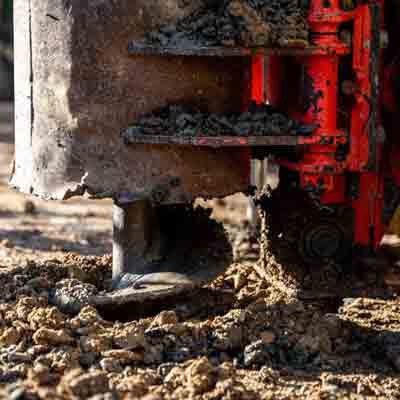
It is also worth thinking about what happens after piling is complete. Spoil arisings from the CFA auger flights need to be managed and disposed of correctly, particularly on brownfield sites where the arisings may be classified as contaminated waste. The logistics of spoil removal should be factored into the site setup planning from the start rather than treated as an afterthought once piling is underway. Engaging your piling contractor in the pre-construction planning process early is the most straightforward way to make sure nothing is missed before work begins.