Providing Safe Access During Construction
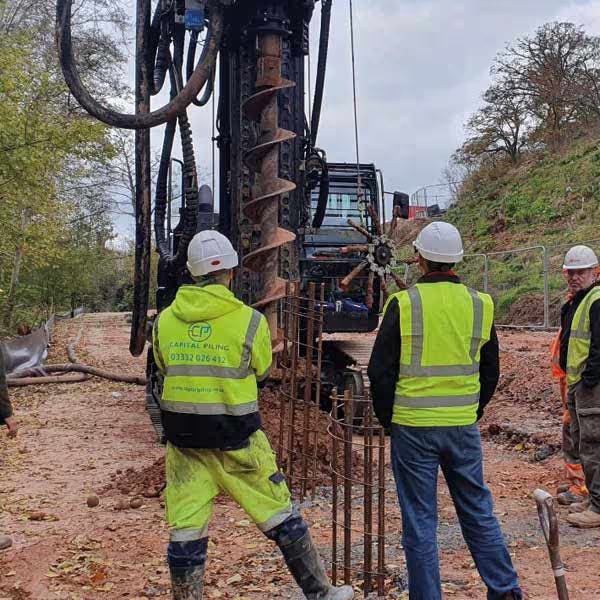
Temporary site access routes are constructed to provide safe and reliable pathways for construction vehicles, piling rigs, delivery lorries, and site personnel during the foundation phase of a project. They are established before piling begins to ensure that equipment and materials can move efficiently around the site.
Unlike permanent roads, temporary access routes are designed specifically to support construction activities and may be removed or altered as the project progresses. Their design depends on ground conditions, site layout, and the type of equipment that will be using them.
At a high level, temporary access routes help maintain safe site operations while supporting the efficient delivery of piling and groundworks.
Supporting Plant, Vehicles, and Personnel
Temporary access routes provide stable pathways for heavy construction equipment, helping vehicles reach working areas without damaging the surrounding ground. They also improve the movement of materials and reduce unnecessary delays during foundation works.
Well-planned routes help separate vehicle movements from pedestrian areas where possible, improving overall site safety and reducing the risk of congestion.
The routes should be positioned to provide convenient access to piling locations, storage areas, and unloading zones while minimising disruption to other construction activities.
Creating and Maintaining Construction Access
The process begins by assessing the site layout, ground conditions, and the expected traffic generated during piling and groundworks. Suitable routes are then identified based on access requirements and construction sequencing.
Where natural ground is unsuitable, temporary roads are constructed using compacted aggregate, engineered fill, or other approved materials to create a stable running surface for heavy vehicles.
Throughout the project, the routes are inspected and maintained to ensure they remain safe and serviceable as weather conditions, plant movements, and construction activities change.
Required on Most Construction Projects
Temporary access routes are used on residential, commercial, industrial, and infrastructure projects wherever construction vehicles require safe access before permanent roads are completed.
They are particularly important on greenfield sites, large developments, and projects with challenging ground conditions where existing access is limited or unsuitable for heavy equipment.
Temporary routes are established during site preparation and remain in use until they are no longer required or are replaced by permanent infrastructure.
Ground Conditions and Route Design
The design of temporary access routes takes into account vehicle loads, ground bearing capacity, drainage, gradients, and turning requirements. These factors help determine the required width, thickness, and construction method.
Where heavy piling rigs or cranes are involved, additional strengthening may be required to ensure the route can safely support repeated traffic without excessive settlement.
Drainage measures are often incorporated to prevent water accumulation and maintain the condition of the access route throughout the construction programme.
Safety, Maintenance, and Site Coordination
Temporary access routes should be inspected regularly to identify damage caused by heavy traffic, poor weather, or changing ground conditions. Any defects should be repaired promptly to maintain safe vehicle movement.
Traffic management measures, including signage, speed controls, and designated crossing points, help improve safety for both vehicles and pedestrians.
Ultimately, well-designed temporary access routes support efficient site logistics, improve safety, and provide reliable access for piling and foundation works throughout the construction programme.