Understanding continuous flight auger piling
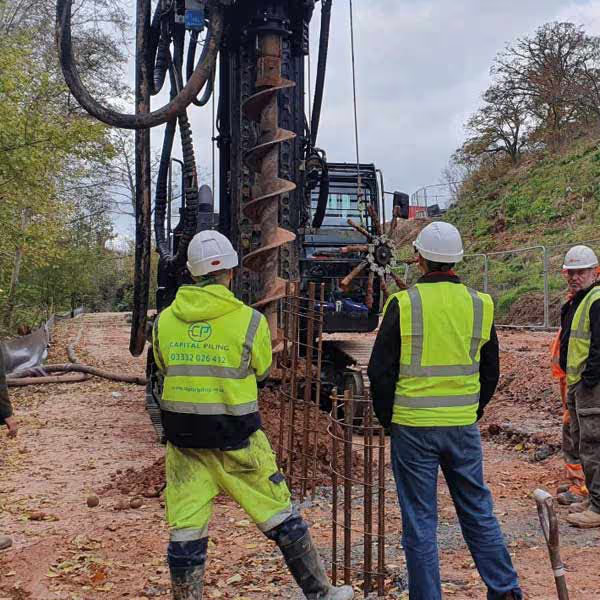
CFA piling, or continuous flight auger piling, is a bored cast in-situ pile installation method in which a continuous flight auger with a hollow central stem is rotated into the ground to the design depth in a single uninterrupted pass. Once at depth, a structural concrete mix is pumped under pressure through the hollow stem as the auger is withdrawn at a controlled rate, filling the bore from the bottom upwards. A prefabricated steel reinforcement cage is then installed into the fresh concrete to form the completed structural pile.
It is one of the most widely specified piling methods in the UK for both residential and commercial construction, offering a reliable combination of speed, structural performance, and minimal disruption to the surrounding environment.
Why it's so widely used across the industry
What makes CFA piling stand out is that the bore is never left open or unsupported at any point during installation. Concrete is placed under pressure as the auger rises, which eliminates the risk of bore collapse. This is a real concern in loose granular soils or ground with a high water table, where open bore methods like SFA piling can struggle to maintain a stable bore throughout the installation process.
The continuous nature of the process also means pile cycle times are short. There is no stopping to install temporary casings, no multi-stage spoil removal, and no waiting between drilling and concreting. On a well-organised CFA operation, a significant number of piles can be completed in a single working day, which has a direct and positive impact on both programme and overall project cost.
Noise and vibration levels are considerably lower than driven piling methods, making CFA a practical and considerate choice on urban sites, residential streets, and anywhere sensitive structures or occupied properties are close by.
How a CFA pile is installed, from start to finish
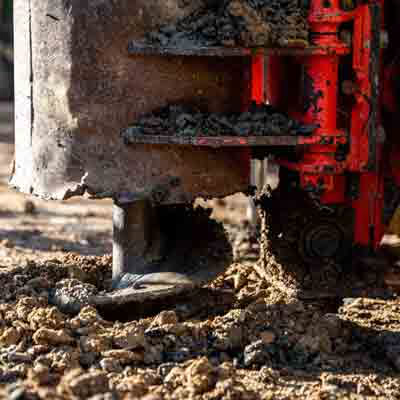
The rig positions over the marked pile location and the auger begins rotating into the ground. Soil is retained on the auger flights as it advances, which helps to support the bore walls during drilling. The auger continues in one continuous movement until it reaches the design depth specified on the piling drawings.
At that point, concrete pumping begins through the hollow stem. The auger is withdrawn steadily and at a controlled rate, with concrete flowing into the bore under pressure as the auger rises. This ensures the pile is formed from the bottom up without any voids or unsupported sections. The withdrawal rate is carefully managed throughout. Withdraw too quickly and the concrete volume may be insufficient to fill the bore properly. Too slowly and the mix can begin to stiffen before the reinforcement cage is placed.
Once the auger is fully clear, the prefabricated steel reinforcement cage is lowered or vibrated into the wet concrete to the specified depth. The pile is then left to cure before pile head cropping and ground beam construction begin.
The projects and ground conditions it suits best
CFA piling is typically specified when near-surface soils are too weak, compressible, or variable to support a shallow foundation, and the structural loads from the building need to be transferred down to more competent bearing strata. It performs well in soft to firm clays, loose to medium dense sands and gravels, and mixed or variable ground profiles.
It is used across a broad range of project types including new build housing developments, apartment schemes, commercial office and retail buildings, basement structures, and residential extensions. Sites underlain by London Clay across the south east of England represent some of the most common ground conditions for CFA piling, and it is a method well suited to the urban environments found throughout that region.
Pile sizes, depths and real time monitoring
CFA piles are available in diameters ranging from 300mm up to 900mm, with depths achievable beyond 30 metres depending on the rig specification and ground conditions. The diameter and depth for any specific project are always determined by the structural engineer, based on the ground investigation data and the calculated structural loads at each pile position.
Modern CFA rigs are equipped with electronic monitoring systems that record and display installation data in real time throughout each pile. Parameters including auger withdrawal rate, rotation speed, concrete volume delivered, and pump pressure are logged continuously and used to produce an individual installation record for every pile. This data is reviewed by the site supervisor during installation and submitted to the structural engineer as part of the quality record for the works.
What to consider before CFA piling is specified
CFA piling depends on a continuous and uninterrupted concrete supply throughout the auger withdrawal process. Any break in pumping during this stage can affect pile integrity and may result in a pile that needs to be investigated or replaced. Reliable, well-maintained plant and experienced operatives are therefore not optional on a CFA project, they are fundamental to achieving consistent quality.
The method is not suited to every ground condition. Very hard ground, rock, or significant buried obstructions can prevent the auger from advancing consistently to the design depth, and in those situations an alternative method will need to be considered. A thorough ground investigation prior to design is the most important step in confirming suitability and ensuring the pile design is based on actual ground conditions rather than assumptions. Getting that right at the start avoids costly problems once work is underway.