A foundation method built on proven structural performance
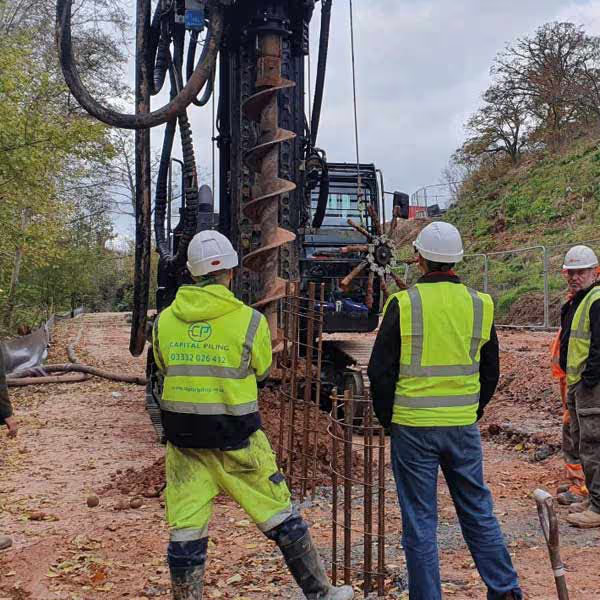
SCD driven piling, or steel cased driven piling, is a foundation method in which a steel casing is driven into the ground using a hydraulic hammer until it reaches the required depth or encounters suitable bearing resistance. Once at depth, a reinforcement cage is placed inside the casing and concrete is poured to form a structural pile capable of transferring building loads from the structure above down into competent ground below.
It is a method with a long track record in UK construction, valued for its ability to perform reliably in ground conditions where bored piling methods can struggle. The steel casing provides continuous support to the bore throughout installation, which removes the dependency on the ground being stable enough to maintain an open bore that methods like SFA piling require.
What sets SCD driven piling apart from other foundation methods
The defining characteristic of SCD piling is the steel casing. Unlike bored methods where the pile is formed in an unsupported or concrete-supported bore, the steel casing in SCD piling provides a rigid, continuous liner that keeps the bore open and stable regardless of the surrounding ground conditions. This makes it particularly effective in loose granular soils, running sands, gravels, and ground with a high water table where maintaining bore stability by other means is difficult or unreliable.
The method is suitable for both residential and commercial projects and can achieve significant load bearing capacity. Because the pile is formed within a steel casing rather than relying on the ground to support the bore, the finished pile has a consistent and well defined cross section from top to bottom, which gives the structural engineer a high degree of confidence in the pile geometry when calculating capacity.
The SCD driven piling installation process step by step
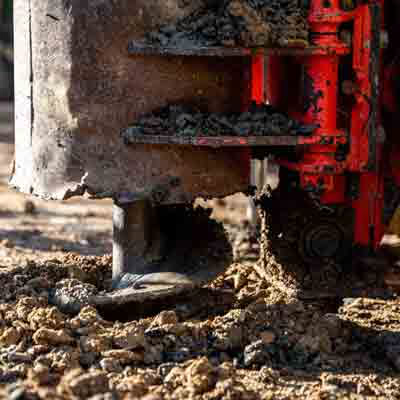
The steel casing is positioned over the pile location and driven into the ground using a hydraulic drop hammer. The hammer strikes the top of the casing repeatedly, advancing it through the soil by displacement rather than removal. The surrounding soil is compacted outwards as the casing descends rather than being excavated and removed, which in granular soils can enhance the load carrying capacity of the pile by increasing the lateral stress in the ground around it.
Once the casing reaches the design depth or achieves the specified set, which is the measured penetration per blow that confirms adequate bearing resistance has been reached, driving stops. A reinforcement cage is then lowered into the casing and concrete is poured to fill it. Depending on the design and the ground conditions, the casing may be left in place permanently as part of the finished pile or extracted as the concrete is placed. Where the casing is extracted, this is done carefully to ensure the concrete fills the full profile of the bore without voids or necking.
The ground conditions and project types where SCD driven piling is most commonly specified
SCD driven piling is most commonly specified on sites where ground conditions make bored piling methods less reliable. Loose fills, running sands, highly permeable gravels, and ground with a persistently high water table are all conditions where the steel casing provides a practical and reliable solution that bored methods cannot match with the same level of confidence.
It is used across a range of project types including residential developments, commercial buildings, and infrastructure works where robust foundations are needed in challenging ground. It is also used on sites where a previous attempt at bored piling has encountered ground conditions that prevented successful installation, making it a practical fallback as well as a first choice method on the right sites.
The technical characteristics of SCD driven piling and how they inform the design
Pile sizes and depths are determined by the structural engineer based on the ground investigation data and the structural loads at each pile position. The driving resistance encountered during installation is monitored and recorded as an indicator of ground conditions and bearing capacity. The set, measured as the penetration of the casing per blow at the end of driving, is used to confirm that the pile has reached a level of resistance consistent with the design assumptions before concreting begins.
Concrete specification and reinforcement design follow the same principles as other cast in-situ methods, with mix design and reinforcement quantities determined by the structural loads, the exposure conditions, and the connection requirements at the pile head. Where the casing is left in place, it contributes to the structural performance of the pile and is accounted for in the design accordingly.
What to factor in when SCD driven piling is being considered for your project
SCD driven piling produces more noise and vibration than bored methods. The percussive action of the hydraulic hammer is an inherent part of the installation process and cannot be eliminated, though it can be managed and mitigated with the right equipment and working practices. On sites close to existing structures, occupied buildings, or sensitive infrastructure, a vibration assessment should be carried out before piling begins to confirm that the levels generated during installation are within acceptable limits.
Access for the driving rig and the associated plant needs to be confirmed during the pre-construction stage. Whilst SCD equipment is adaptable and available in a range of configurations, there are minimum requirements for working space, headroom, and ground bearing capacity that need to be met for the rig to operate safely. Identifying any constraints early and discussing them with the piling contractor before design is finalised is the most straightforward way to make sure the method is workable on your specific site before any commitment is made.