Other Servces
Overview
Key Points
How It Works
When & Where It’s Used
Technical Details
Considerations
Contact information
When to use SFA piling
SFA piling is typically used when a project requires a reliable foundation solution that can be installed within restricted or sensitive site conditions. It offers a controlled method of forming piles, making it well suited to situations where access is limited, surrounding structures are present or minimising disruption is important.
Rather than being selected purely on structural requirements, SFA piling is often chosen because it fits the practical realities of the site. This includes how equipment can be brought in, how work can be carried out safely and how the installation will affect the surrounding environment.
Key factors that influence its use
The decision to use SFA piling is usually based on a combination of site conditions and project requirements.
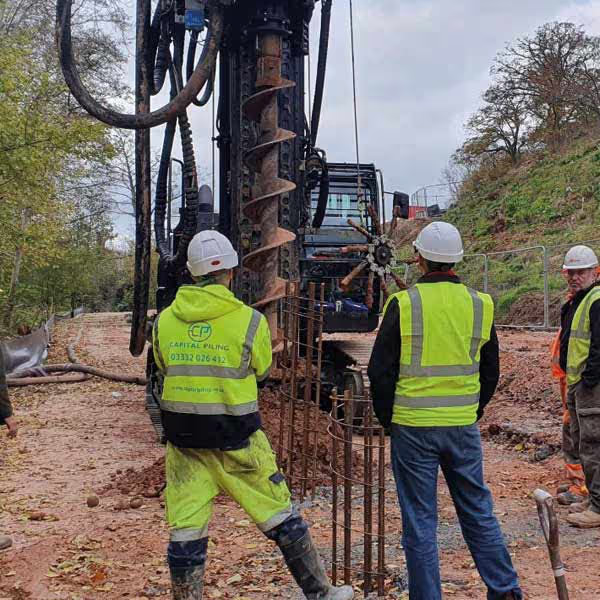
Access is often one of the main drivers. On sites where space is restricted or entry points are limited, sectional auger systems allow piling to be carried out where larger rigs would not be practical.
Ground conditions also play a role. SFA piling is most effective where the soil can maintain a stable bore during installation, allowing the process to be carried out efficiently and without additional support.
The proximity of existing structures is another important consideration. The reduced vibration associated with drilling makes it a suitable option in built up areas where movement needs to be controlled.
Matching the method to the site
Choosing SFA piling is not just about whether it can work, but whether it is the most appropriate option for the conditions on site.
On many projects, this involves balancing several factors at once. A site may have restricted access, variable ground conditions and nearby structures, all of which influence the decision.
In practice, this often means reviewing the available information, including ground investigation data and structural requirements, and selecting a method that can be delivered efficiently without introducing unnecessary risk or complexity.
This is where experience becomes important, as the most effective solution is not always the most obvious one.
Typical scenarios for SFA piling
SFA piling is commonly used in situations such as residential extensions, new build housing and low rise commercial developments.
It is particularly well suited to urban sites, rear garden projects and locations where working space is limited. It is also frequently used where construction is taking place close to existing buildings, as the method allows for a more controlled installation.
In these environments, the ability to adapt the approach to suit the site is often just as important as the structural performance of the piles themselves.
Practical considerations behind the choice
From a technical perspective, the suitability of SFA piling depends on how the ground behaves during drilling and how loads can be transferred into deeper layers.
This includes assessing soil strength, identifying suitable founding depths and determining how the piles will be designed to meet structural requirements.
At the same time, practical factors such as equipment size, working space and site logistics need to be considered alongside the technical design. Bringing these elements together is what allows the method to be used effectively in real world conditions.
Knowing when it is the right option
While SFA piling is a versatile solution, it is not always the best choice for every project.
In ground conditions where the bore cannot remain stable, or on sites where very high load capacities are required, alternative piling methods may be more suitable. The key is understanding the limitations as well as the advantages.
For most residential and constrained projects, SFA piling provides a practical balance between performance and buildability. Taking the time to assess the site properly at an early stage helps ensure that the method selected is both suitable and efficient for the project as a whole.