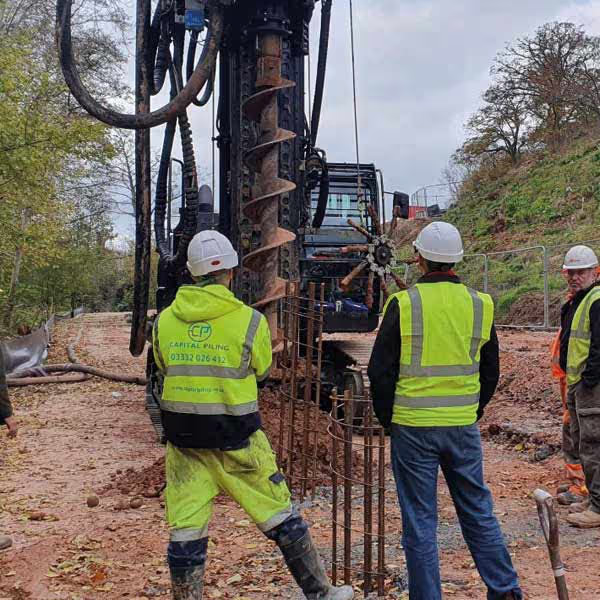
Screw piling guides
Clear, practical guidance on piling methods, groundworks, site preparation and technical advice.
%20-%20Copy.jpg)
Ground Conditions
High groundwater levels can complicate excavation and affect conventional foundation methods. Screw piling installs without the need for open excavations, making it effective in water-bearing ground conditions.
Variable strata can lead to inconsistent support and unpredictable foundation performance. Screw piling adapts by advancing through changing soils to reach stable load-bearing layers.
Clay soils can expand, shrink, and cause movement that affects foundation stability. Screw piling provides reliable load transfer by anchoring into stable ground below the active clay zone.
Loose soils can shift under load, leading to settlement and reduced foundation stability. Screw piling displaces and compacts the soil during installation to create a stable load-bearing foundation.
Site Constraints
Limited working space restricts equipment movement and material handling on site. Screw piling uses compact, adaptable rigs that can operate efficiently in confined areas.
Low headroom limits the use of standard piling rigs due to restricted vertical clearance. Screw piling can be installed with low-headroom equipment, making it suitable for confined structures.
Working near existing structures requires careful control to prevent movement or damage. Screw piling produces minimal vibration, making it suitable for safe installation close to buildings.
Restricted access sites limit the ability to bring in large machinery and materials. Screw piling uses compact equipment that can operate effectively in tight or hard-to-reach areas.
Installation Challenges
Unexpected ground resistance can slow installation or prevent piles reaching design depth. Screw piling uses torque-controlled installation to adapt and achieve required load-bearing capacity.
Insufficient torque can prevent screw piles from reaching the required depth or load capacity. Screw piling uses torque monitoring to ensure piles achieve proper embedment and structural performance.
Alignment issues can occur if the pile deviates from the required position or vertical tolerance. Screw piling uses guided installation and monitoring to maintain accurate alignment throughout the process.
Obstructions such as rubble, old foundations, or buried debris can block or deflect installation. Screw piling can often displace or bypass minor obstructions to continue reaching stable ground.
What happens if ground conditions differ from the investigation report?
If unexpected conditions are encountered, works are paused, the issue is assessed, and a solution is agreed with the engineer and client before proceeding.
How long does piling usually take?
Most residential piling works are completed within a few days. Larger or more complex projects may take longer depending on scope and conditions.
How deep do piles typically go?
Pile depth depends on ground conditions and load requirements.It's determined using ground investigation data and confirmed as part of the piling design.
Does piling cause vibration or noise?
Some piling methods generate vibration or noise, but modern equipment and controlled installation techniques help keep this within acceptable limits.