Understanding Basement and Internal Piling
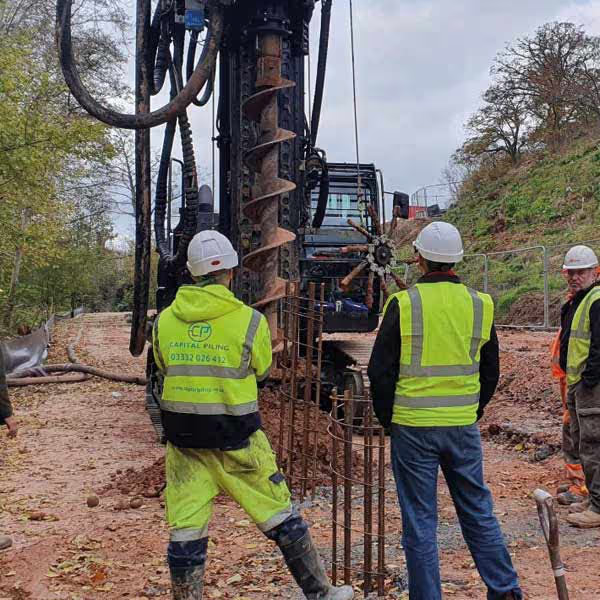
Basement and internal piling means installing mini piles inside or beneath a structure. It tends to take place in confined or restricted environments. This work strengthens, extends, or adds foundations below ground. At the same time, the building remains intact.
Mini piling is particularly suited to these conditions. This is due to the use of compact rigs and low-impact installation methods. It allows for pile installation in spaces where traditional equipment cannot fit.
Working Within Existing Structures
Internal piling takes place inside an existing building. It often occurs through ground floors or within basements. This introduces constraints around access, headroom, and structural sensitivity.
Unlike open-site piling, these works demand extra care. After all, they need to avoid disturbing the structure above. This is where compact rigs come in to manoeuvre in tight working areas. They install piles beneath floors, in rooms, or through formed openings.
This approach upgrades foundations without demolishing the building.
Basement Construction and Structural Support
Mini piling is often used in basement construction. This is most common when forming a new lower ground level beneath a property. In these situations, contractors install piles to support the structure. Meanwhile, excavation takes place below.
This method is commonly used to transfer loads to deeper, stable strata, allowing excavation and construction to proceed safely beneath the existing building.
Underpinning and Load Transfer
Internal piling overlaps with underpinning. This is where contractors strengthen or replace foundations. They then install mini piles next to or beneath walls. Beams or slabs connect these piles to support the structure.
This transfers loads away from weak or shallow foundations and into deeper ground. Such provides long-term stability.
Restricted Access and Logistics
One of the main challenges with basement and internal piling is logistics.
Access points may include:
- Narrow side returns or internal doorways
- Temporary openings formed in the structure
- Restricted working areas within the building
Contractors must manage materials, equipment, and spoil removal within these constraints. Mini piling systems work within these limitations. They handle work without large-scale site disruption.
Low Headroom Operation
Many internal and basement projects involve limited vertical clearance. Low-headroom rigs install piles in basements, on ground floors, and beneath existing slabs.
Some rigs work in spaces with only a few metres of headroom. They allow for pile installation where full-height equipment cannot fit.
Minimising Structural Impact
Inside an existing structure, contractors must manage vibration, movement, and installation methods.
Mini piling is quieter than traditional systems and produces less vibration. This reduces the risk of damage to nearby structures.
This is particularly important when working close to load-bearing walls or structural elements. After all, these must remain stable throughout the process.
Sequencing and Construction Approach
Basement and internal piling are usually carried out in a controlled sequence.
This often involves:
- Installing piles in stages
- Supporting sections of the structure as work progresses
- Linking piles with beams or slabs to form a new foundation system
This staged approach ensures that the building remains stable throughout the works. Such is particularly important during excavation or structural alteration.
A Solution for Constrained and Complex Projects
Basement and internal piling install foundations where traditional methods cannot work. They work beneath structures, in confined spaces, and on sites with limited access.
It combines structural support with minimal disruption. This suits refurbishment, extension, and basement projects.
Do You Need More Information?
Do you need further guidance on basement or internal piling? If so, Capital Piling can review your drawings and site conditions. From this, we can recommend the most suitable approach.