Concrete or Grout Placement
Concrete or grout placement is a critical stage in the mini piling process. It forms the structural element of the pile and enables it to transfer loads into the surrounding ground. Once the pile has been installed to the required depth, it is filled with either concrete or high-strength cementitious grout. This all depends on the piling method used.
This stage determines the integrity, strength, and long-term performance of the pile.
The Purpose of Concrete or Grout
The primary function of concrete or grout is to create a solid load-bearing element within the ground. It surrounds any reinforcement and bonds with soil. This allows loads to be transferred through both shaft friction and end bearing.
In grouted systems, the grout also improves the interaction between the pile and the ground. This increases overall load capacity by forming a strong bond with the surrounding soil.
Ensuring Complete and Continuous Fill
One of the key requirements during placement is ensuring that the pile is fully filled without gaps or defects.
Contractors control the pumping and monitor volume and pressure throughout installation. A continuous fill is essential to maintain structural integrity. It also ensures loads are transferred effectively through the entire length of the pile.
Concrete Placement in Augered Systems
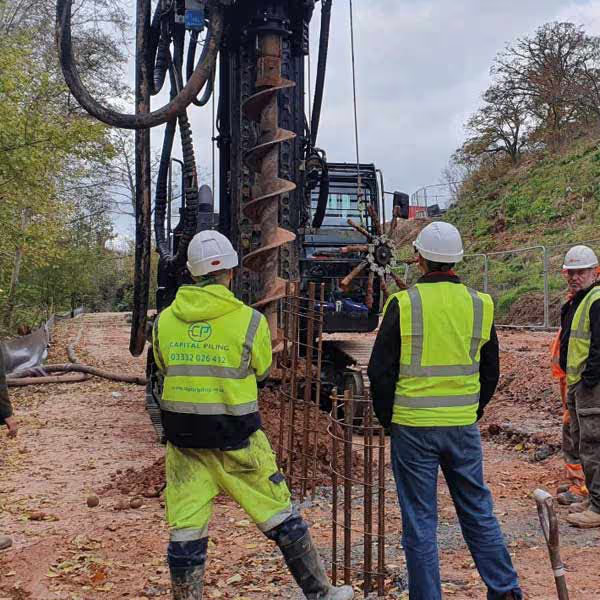
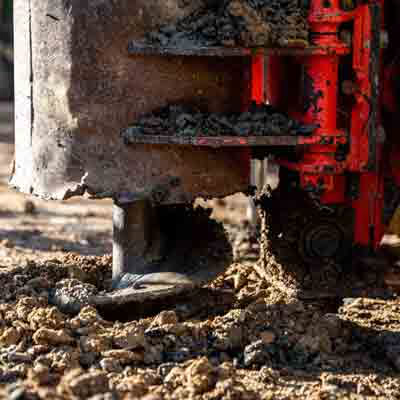
In Continuous Flight Auger (CFA) systems, concrete goes in as the auger withdraws. This ensures that the bore remains supported and prevents collapse during installation.
Concrete is pumped under controlled conditions to maintain a continuous column. It works to form the pile as the drilling tool is removed.
This method allows piles to be installed efficiently. At the same time, it maintains stability in loose or variable soils.
Grout Placement in Cased or Driven Systems
Some mini piling systems use grout instead of concrete, especially those with steel casing or driven elements.
The process typically involves:
- Advancing a casing or bar to the required depth
- Inserting reinforcement
- Pumping high-strength grout to fill the pile
The grout fills any voids and bonds with the ground, forming a solid pile within the casing.
Interaction with Reinforcement
Concrete or grout works in conjunction with steel reinforcement. They work to form a composite structural element.
The material must fully encapsulate the reinforcement to ensure proper bonding and load transfer. Poor placement or incomplete coverage weakens the pile.
Ground Conditions and Placement Method
The choice between concrete and grout, and how it is placed, depends on ground conditions and the installation method.
- In unstable or loose soils, controlled placement is required to prevent collapse
- In water-bearing ground, methods must maintain stability during filling
- In cohesive soils, bonding between the material and ground contributes significantly to performance
The method is selected to suit these conditions and ensure a consistent result.
Quality Control During Placement
Placement is closely monitored to ensure that the correct volume and consistency of material are used. This helps confirm that the pile has been formed to the required specification.
Any variation in placement can affect load capacity. As a result, control at this stage is essential to overall foundation performance.
A Structural Element Within the Ground
Concrete or grout placement is not simply a filling operation. It is the stage that transforms a drilled or driven hole into a structural foundation element capable of supporting the building.
Good placement, bonding, and reinforcement let the pile carry both downward and lateral loads.
Do You Need More Information?
Do you require further guidance on concrete or grout placement in mini piling? If so, a specialist contractor such as Capital Piling can review your project details. From this, we can advise on the most suitable method based on your site conditions.