Concrete Placement
Concrete placement is the stage where the pile is formed, filling the drilled bore and surrounding the reinforcement cage to create a solid structural element within the ground. It is one of the most critical parts of the open bore piling process, as it directly affects the integrity and performance of the finished pile.
The process needs to be carried out in a controlled and continuous way to ensure the bore is filled properly and that the concrete achieves full contact with the surrounding ground.
Why Concrete Placement Is Critical
The quality of concrete placement determines how well the pile performs once installed.
If the concrete is placed correctly, it forms a continuous, well-compacted structure that transfers loads effectively into the ground. If not, there is a risk of defects such as voids or weak zones, which can affect the long-term performance of the foundation.
For this reason, the process is carefully managed to ensure consistency from one pile to the next.
The Placement Process
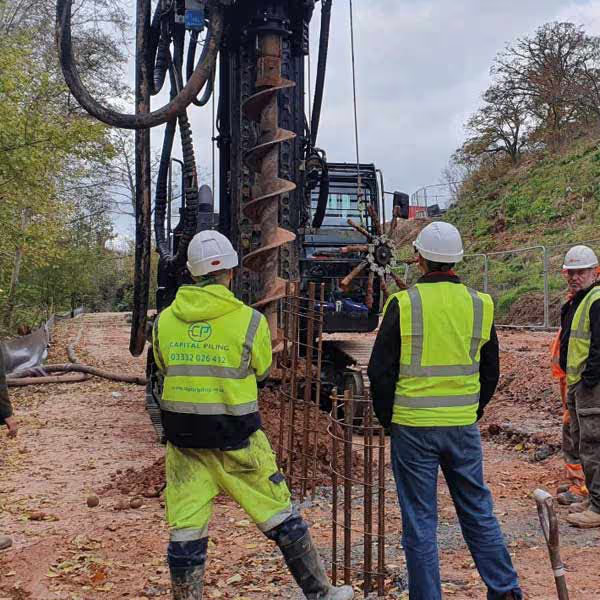
Once the reinforcement cage is in position, concrete is introduced into the bore to form the pile.
This is typically done in a continuous pour, ensuring that the bore is filled from the base upwards. The aim is to avoid interruptions that could compromise the integrity of the pile.
As the concrete is placed, it displaces any remaining loose material and fully surrounds the reinforcement cage, creating a strong bond between the steel and the concrete.
Maintaining a steady flow during this stage is key to achieving a consistent and reliable result.
Application Across Different Sites
Concrete placement is required on all open bore piles, but the approach can vary depending on site conditions.
On sites with good access, concrete can often be delivered and placed directly with minimal interruption. On more restricted sites, additional coordination may be needed to manage delivery and ensure that the pour can be completed efficiently.
In all cases, the objective remains the same - to complete the placement in a controlled manner that supports the quality of the finished pile.
Quality and Consistency
The type of concrete used, along with how it is handled and placed, plays an important role in the outcome.
The mix must be suitable for piling applications, allowing it to flow effectively within the bore while achieving the required strength once cured. Consistency in the mix and placement process helps ensure that each pile performs as expected.
Timing is also important, particularly in relation to reinforcement installation and bore stability, as delays can affect the condition of the bore prior to pouring.
Managing Risks During Placement
The main risks during concrete placement relate to interruptions, poor flow or instability within the bore.
If the pour is not continuous, or if the concrete does not fully fill the bore, it can lead to inconsistencies within the pile. Similarly, if the bore condition changes before placement, it can affect how the concrete settles.
Careful coordination of the process helps minimise these risks, ensuring that each pile is formed correctly and performs as intended once in service.