SFA open bore guides
Clear, practical guidance on piling methods, groundworks, site preparation and technical advice.
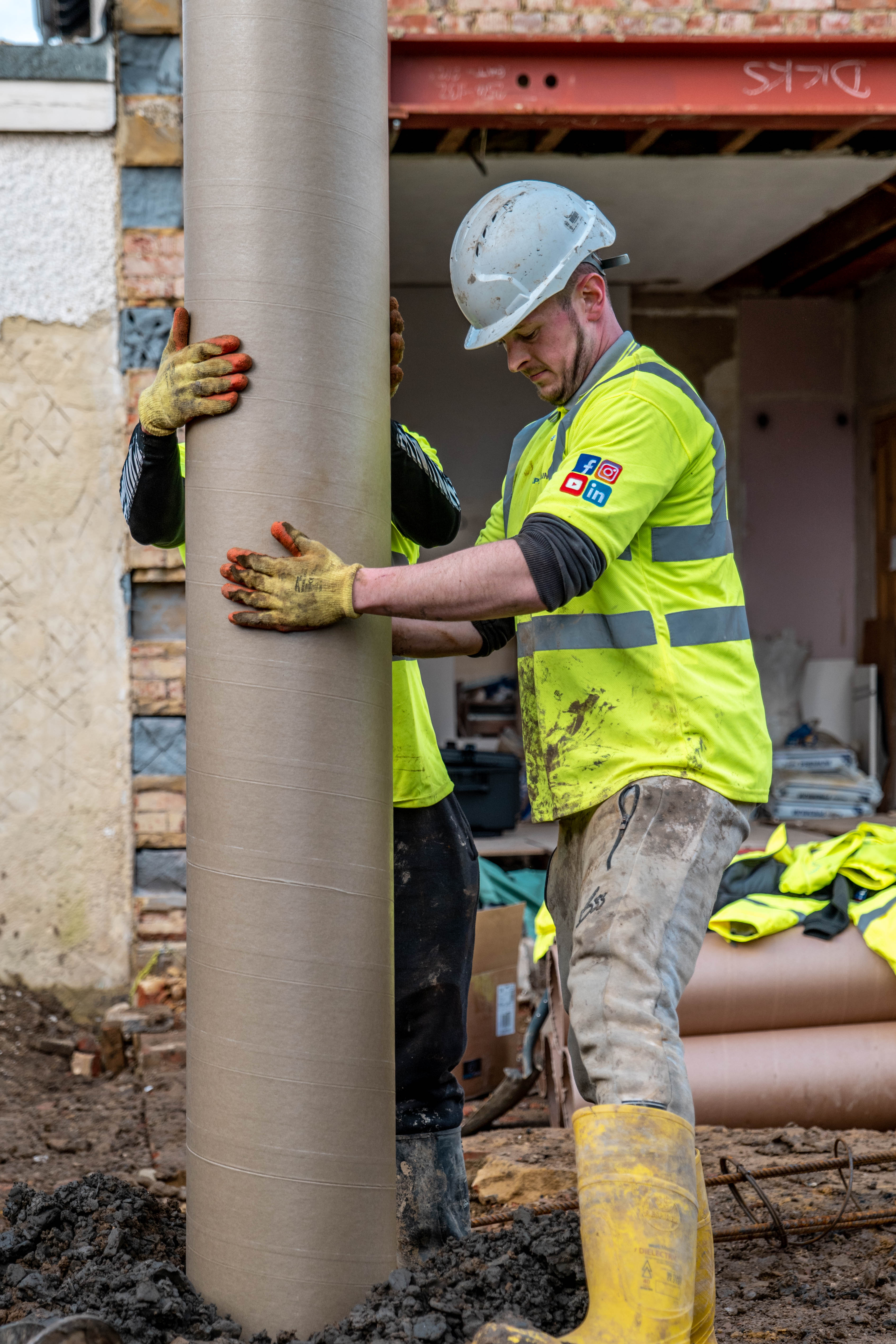
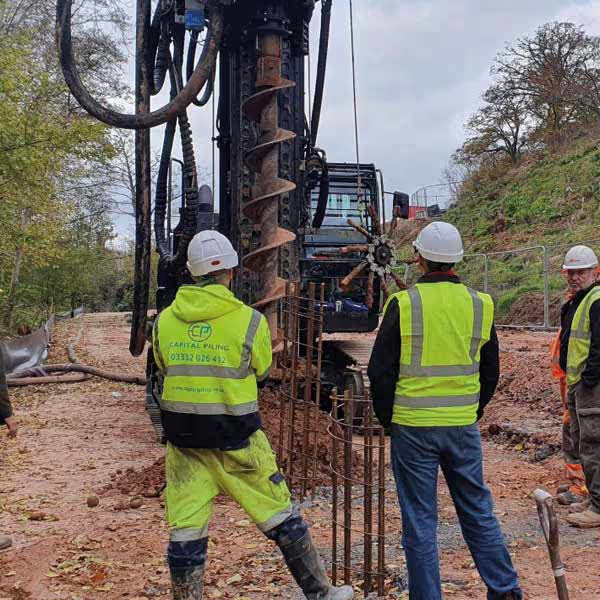
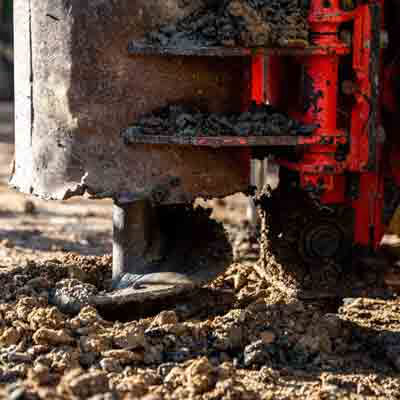
Ground Conditions
Soft ground can lead to excessive settlement and reduced foundation stability under structural loads.SFA Open Bore piling transfers loads to deeper, more competent strata for a stable foundation solution.
Loose granular soils can shift under load, causing settlement and foundation instability.SFA Open Bore piling penetrates through these weak layers to transfer loads into stronger ground below.
High groundwater levels can affect excavation stability and complicate foundation construction.SFA Open Bore piling enables deep foundation installation while managing challenging groundwater conditions.
Collapsing boreholes can occur when unstable soils fall into the excavation during drilling.SFA Open Bore piling uses appropriate drilling techniques to maintain bore stability and ensure successful installation.
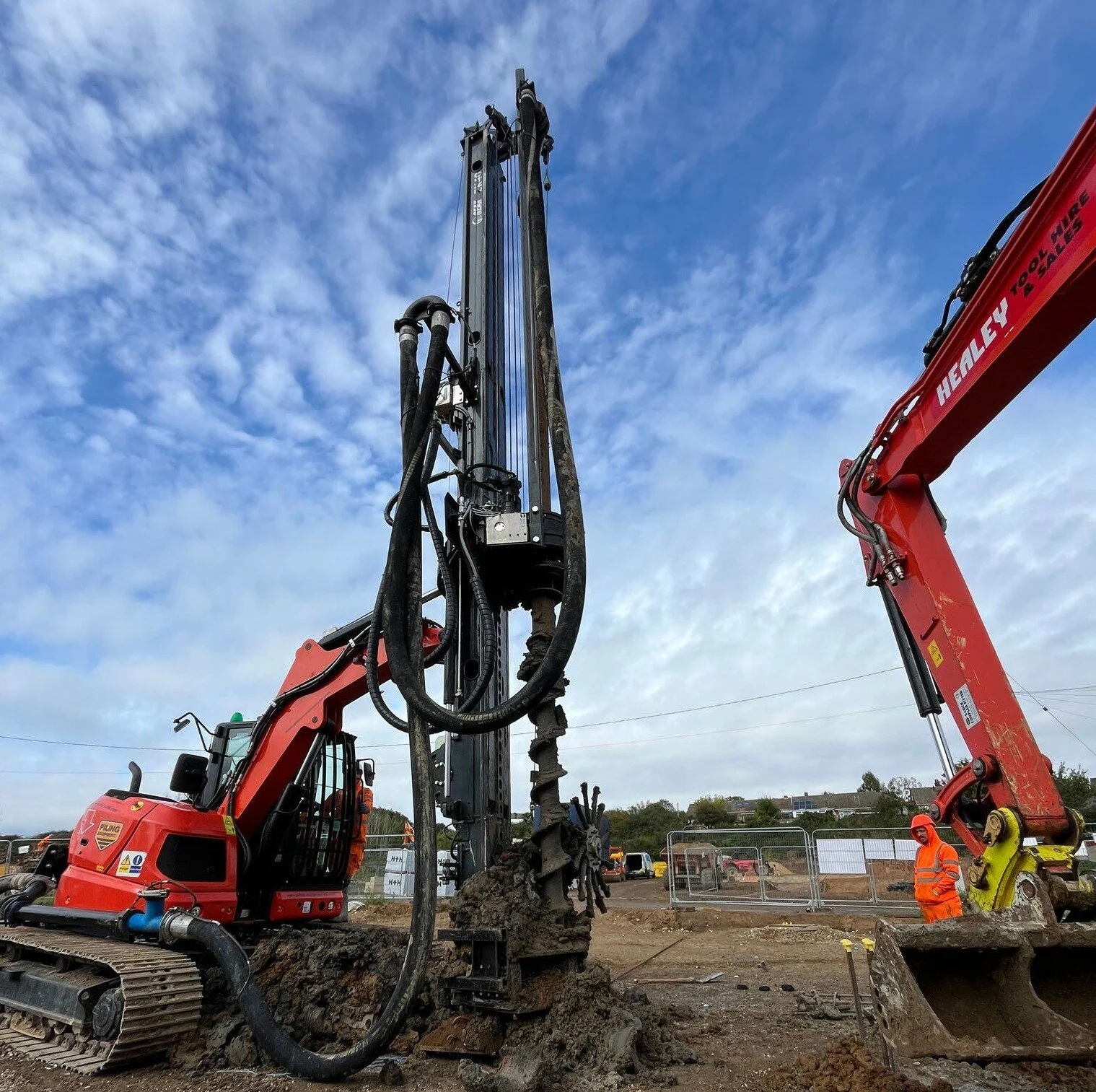
Site Constraints
Limited site access restricts the movement of large piling equipment and materials on site.SFA Open Bore piling uses adaptable rigs that can operate effectively in confined or restricted areas.
Urban environments often involve tight working spaces, nearby structures, and restricted logistics.SFA Open Bore piling is well suited to urban sites, minimising disruption while achieving deep foundation installation.
Adjacent structures can limit vibration tolerance and restrict piling methods due to risk of damage.SFA Open Bore piling is designed to reduce disturbance while safely installing foundations near existing buildings.
Tight working areas limit equipment movement and space for material handling on site.SFA Open Bore piling uses compact, adaptable rigs that can operate efficiently in confined spaces.
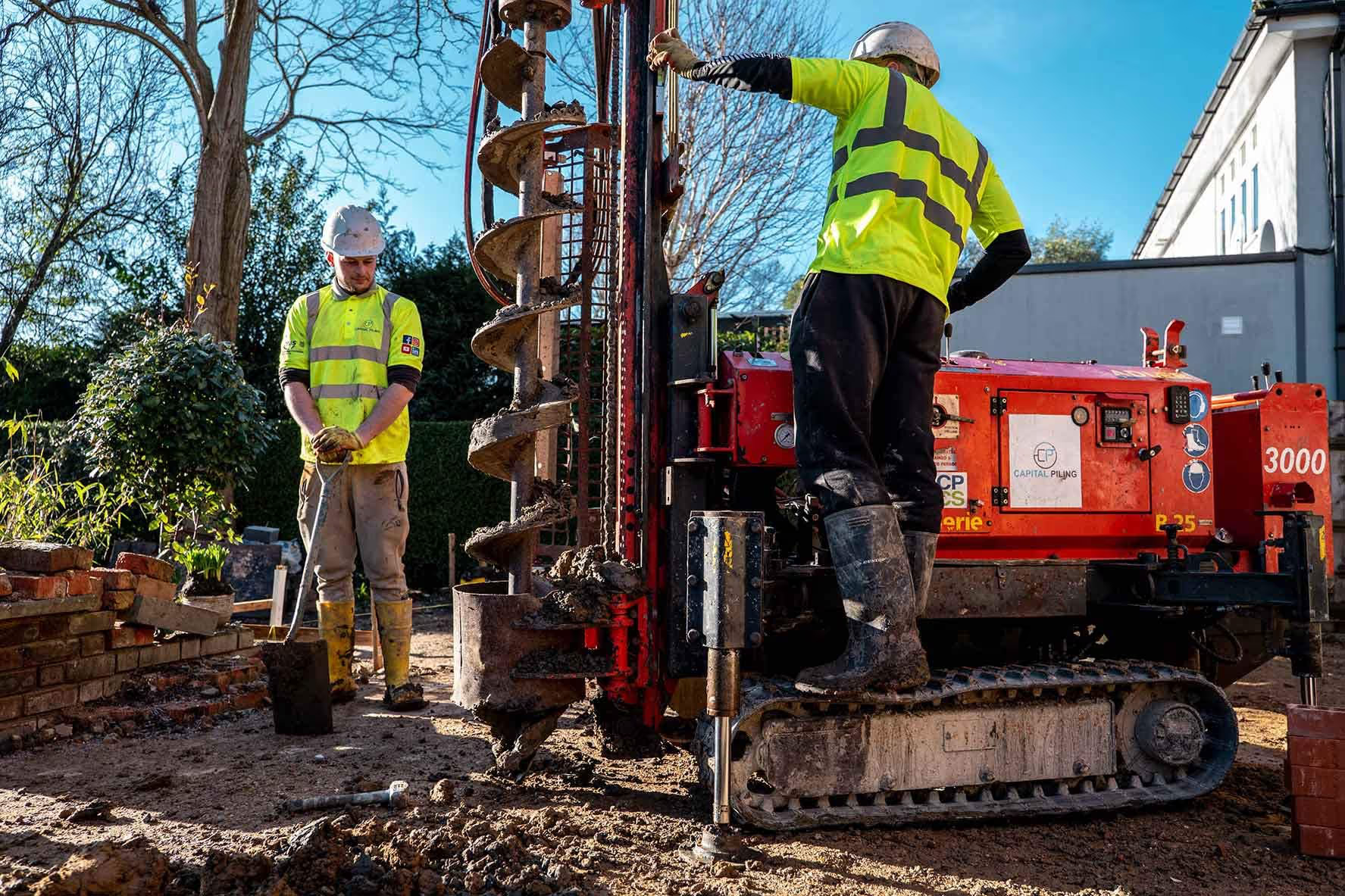
Installation Challenges
Bore instability can occur when the drilled hole collapses or deforms during excavation.SFA Open Bore piling uses controlled drilling methods to maintain stability and ensure a clean, workable bore.
Reinforcement cages can shift or become misaligned during lowering into the borehole.SFA Open Bore piling ensures accurate placement techniques to maintain correct alignment and structural integrity.
Concrete placement issues can arise from poor flow, segregation, or contamination during pouring.SFA Open Bore piling uses controlled tremie or pumping methods to ensure consistent and uniform concrete placement.
Obstructions such as buried rubble, old foundations, or rock can block or slow drilling progress.
SFA Open Bore piling can adapt drilling methods to penetrate or remove obstructions and continue installation safely.
What happens if ground conditions differ from the investigation report?
If unexpected conditions are encountered, works are paused, the issue is assessed, and a solution is agreed with the engineer and client before proceeding.
How long does piling usually take?
Most residential piling works are completed within a few days. Larger or more complex projects may take longer depending on scope and conditions.
How deep do piles typically go?
Pile depth depends on ground conditions and load requirements.It's determined using ground investigation data and confirmed as part of the piling design.
Does piling cause vibration or noise?
Some piling methods generate vibration or noise, but modern equipment and controlled installation techniques help keep this within acceptable limits.