Ground Beam Connections
Ground beam connections form the link between individual piles and the structure above, allowing loads to be distributed evenly across the foundation. Rather than piles working independently, ground beams tie them together, creating a continuous support system.
In SFA open bore piling, these connections are a key part of the overall foundation design. They ensure that loads from walls, columns and other structural elements are transferred effectively into the piles and then into the ground.
Why Ground Beams Are Important
Ground beams play a central role in how a piled foundation performs.
They connect the heads of the piles and provide a stable platform for the structure above. This helps spread loads more evenly, reducing the risk of differential settlement and improving overall stability.
Without properly designed ground beam connections, even well-installed piles may not perform as effectively as intended.
How Ground Beam Connections Work
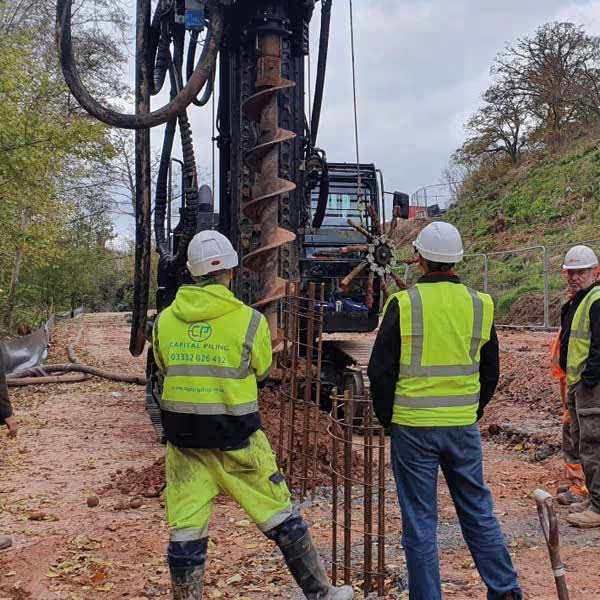
Once piles have been installed, the top of each pile is prepared to form a connection point. Ground beams are then constructed to link these piles together, typically using reinforced concrete.
The beams are positioned to align with load-bearing elements such as walls or columns, ensuring that loads are transferred directly into the piles. Reinforcement within the beams is designed to handle bending forces and maintain structural integrity across the foundation.
This creates a continuous load path from the structure, through the beams and into the piles below.
Application Across Different Projects
Ground beam connections are used on most piled foundation systems, particularly where loads need to be distributed across multiple piles.
On residential projects, they are commonly used to support external walls and internal load-bearing elements. On more complex builds, they may be designed to accommodate varying load conditions or more intricate layouts.
They are especially important on sites where ground conditions are uneven, as they help ensure the structure is supported consistently.
Design and Construction Considerations
Ground beam design is influenced by factors such as span, load distribution and the arrangement of piles.
The beams must be reinforced appropriately to handle bending and shear forces, and their dimensions must suit both the structural requirements and the layout of the foundation. The connection between the beam and the pile head is also critical, as this is where loads are transferred into the piling system.
Careful coordination between pile positions and beam design helps ensure that everything aligns correctly during construction.
Ensuring Effective Connections
For ground beam connections to perform properly, both design and installation need to be carried out with accuracy.
Misalignment between piles and beams can create complications on site, while inadequate reinforcement can affect long-term performance. It is also important to ensure that the sequence of works allows for proper preparation of pile heads before beam construction begins.
By planning these elements carefully, the foundation system can work as a cohesive whole, providing reliable support for the structure above.