Sequence of Constructing Ground Beams On Site
The construction of ground beams follows a structured sequence of works that ensures the beams are correctly formed, aligned, and integrated with the foundation system. This process typically takes place after the supporting foundations, such as piles or pad foundations, have been installed and verified.
Ground beam construction involves excavation, reinforcement installation, formwork preparation, and concrete placement. Each stage must be carefully controlled to ensure the finished beam meets the required structural and dimensional standards.
At a high level, the process is designed to create a continuous reinforced concrete element that connects foundation points and supports the structure above.
Main Stages of Ground Beam Construction
The construction process begins with setting out the beam positions based on engineering drawings and survey data. Accurate positioning is essential to ensure correct alignment with piles, pile caps, or other supporting elements.
Excavation is then carried out to the required depth and width, creating a trench where the ground beam will be formed. The quality of excavation is important to ensure stable formation and correct dimensions.
Once excavation is complete, reinforcement is installed and checked before concrete is poured, forming the structural beam that ties the foundation system together.
From Excavation to Structural Element
After the pile or foundation system is in place, ground beam locations are marked and excavated to the specified dimensions. The excavation must be stable and properly formed to support reinforcement and concrete placement.
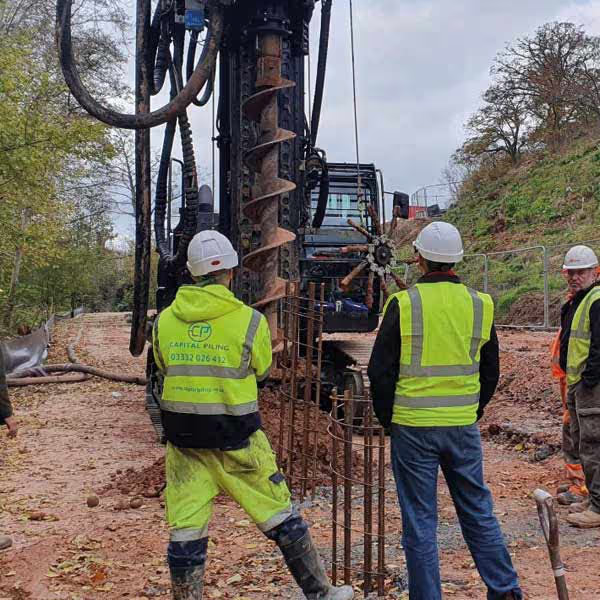
Reinforcement cages are then assembled and positioned within the trench, ensuring correct cover and alignment with connection points such as pile heads or starter bars. This step is critical for achieving structural continuity.
Concrete is then poured into the prepared formwork or trench, filling the beam profile and encapsulating the reinforcement. Once cured, the ground beam becomes a rigid structural element that distributes loads across the foundation system.
Construction in Piled and Shallow Foundation Systems
Ground beam construction is commonly used in both piled foundation systems and traditional shallow foundation designs where load distribution between multiple points is required.
It is particularly important in developments where piles are used, as ground beams provide the structural link between individual pile positions and the superstructure above.
This construction method is widely used in residential housing, commercial buildings, and infrastructure projects where controlled load transfer and structural stability are required.
Construction Accuracy and Material Requirements
Ground beam construction requires careful attention to dimensional accuracy, reinforcement placement, and concrete quality. Tolerances must be maintained to ensure proper alignment with supporting foundations and structural elements.
Concrete strength, curing time, and reinforcement detailing are all specified based on engineering design requirements. These factors ensure the beam can safely resist bending, shear, and load transfer demands.
Coordination between excavation, reinforcement installation, and concrete pouring is essential to maintain structural integrity and avoid defects such as misalignment or voids.
Quality Control and Site Conditions
Ground conditions can significantly influence the construction process, particularly during excavation. Unstable soils or groundwater ingress may require additional support measures to maintain trench stability.
Accurate setting out is critical, as errors at this stage can affect the alignment of the entire foundation system. Regular surveying and inspection help ensure compliance with design specifications.
Ultimately, successful ground beam construction depends on controlled execution of each stage, combined with effective quality assurance to ensure the finished element performs as intended within the overall foundation system.