Ground Investigation Inputs
Ground investigation is one of the most important stages in the design of any piling system. It provides the data needed to understand soil conditions, identify suitable bearing strata and determine how loads can be safely transferred into the ground.
In SFA open bore piling, the accuracy of this information has a direct impact on how the piles are designed and installed. Without a clear understanding of the ground profile, it is difficult to make informed decisions around depth, diameter and overall foundation layout.
At Capital Piling, ground investigation data is reviewed as part of our in-house design process, ensuring that all design decisions are based on reliable site-specific information.
Why Ground Investigation Matters
Every site is different, and ground conditions can vary significantly even within a relatively small area.
Ground investigation helps identify these variations, providing insight into soil types, strength and the presence of any potential challenges such as groundwater or made ground. This information allows the piling design to be tailored to the site, rather than relying on assumptions.
A well-informed design reduces risk, improves efficiency and helps ensure the foundation performs as intended.
How the Information Is Used
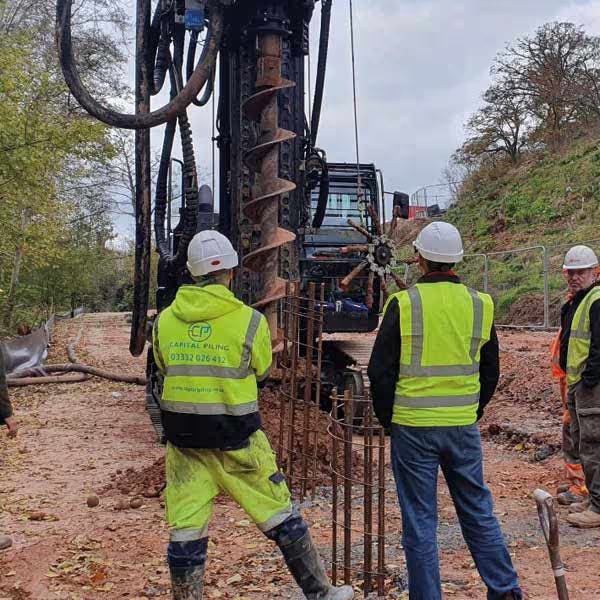
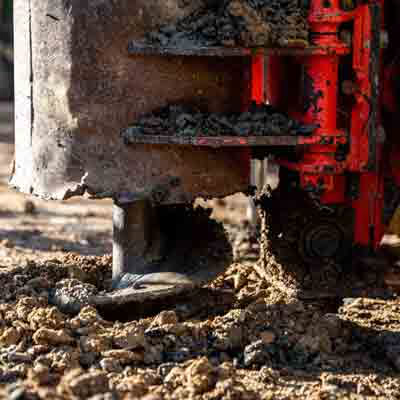
Ground investigation typically involves borehole drilling, soil sampling and testing to build up a detailed picture of the subsurface conditions.
This data is then used to assess how piles will interact with the ground, including where suitable bearing layers are located and how much load they can support. It also helps determine whether methods such as SFA open bore piling are appropriate for the site.
By integrating this information into the design process, it becomes possible to develop a foundation solution that is both safe and practical to install.
Application Across Different Projects
Ground investigation is relevant to all types of piling projects, from small residential extensions to larger commercial developments.
On smaller projects, investigation data may be more limited, but it still plays a key role in confirming ground suitability and informing the design. On more complex sites, detailed investigation is essential to manage risk and ensure the correct piling method is selected.
In both cases, having a clear understanding of the ground conditions helps avoid unexpected issues during construction.
Interpreting Ground Data
Ground investigation reports provide information on soil layers, strength parameters and groundwater conditions.
At Capital Piling, our in-house design team reviews this data to determine how it will influence pile design. This includes identifying suitable founding depths, assessing load capacity and confirming whether additional measures may be required during installation.
By working directly with this information, we can ensure that the design reflects the actual conditions on site, rather than relying on general assumptions.
The Importance of Accurate Data
The quality of the ground investigation has a direct impact on the reliability of the piling design.
Incomplete or inaccurate data can lead to uncertainty, which may result in conservative designs or unexpected challenges during installation. For this reason, it is always beneficial to carry out an appropriate level of investigation at an early stage.
If ground conditions are unclear, early input from a specialist contractor can help interpret available data and advise on whether additional investigation may be required before proceeding.