Installation Monitoring
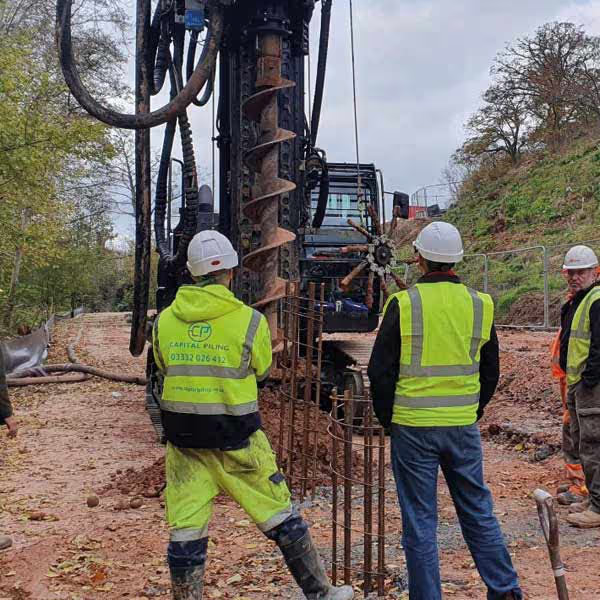
Installation monitoring is the process of recording and checking each stage of piling as it is carried out, ensuring that the work being completed on site matches the design requirements. In open bore piling, this plays an important role in confirming that piles are installed to the correct depth, in the right ground conditions and in accordance with the specified method.
While the piling process itself is relatively controlled, monitoring provides an additional level of assurance. It allows any variations in ground conditions or installation behaviour to be identified early, helping to maintain consistency across the project.
Why Monitoring Is Important
Even with a well-designed piling system, site conditions can vary. Ground profiles are not always perfectly consistent, and small differences can affect how each pile is installed.
Monitoring provides a way to track what is actually happening on site, rather than relying solely on pre-construction information. It helps confirm that piles are reaching the intended founding depth and that the installation process is being carried out correctly.
This level of oversight is particularly valuable on projects where ground conditions are less predictable or where maintaining quality across multiple piles is essential.
What Is Monitored During Installation
During open bore piling, several key aspects of the process are typically recorded.
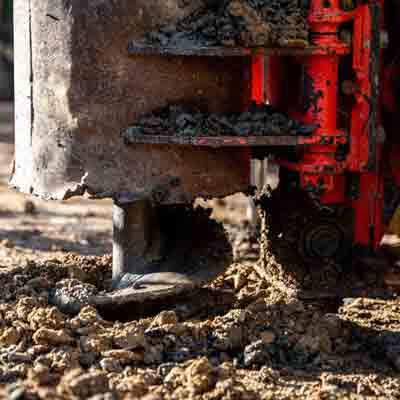
This includes drilling depth, ground conditions encountered, and the sequence of installation. Observations are also made during reinforcement placement and concreting to ensure that each stage is completed as expected.
Rather than being a separate process, monitoring runs alongside the installation itself. It forms part of the day-to-day operation on site, providing a record of how each pile has been constructed.
Application Across Projects
Installation monitoring is relevant on all piling projects, but its importance increases with the complexity of the site.
On smaller residential works, it helps ensure consistency and provides a record of what has been installed. On larger or more technically demanding projects, it becomes a key part of quality control, supporting both compliance and long-term performance.
It is particularly useful on sites where ground conditions vary, as it allows adjustments to be made if unexpected conditions are encountered.
Recording and Verification
Monitoring typically involves keeping detailed records of each pile, including depth, ground conditions and any observations made during installation.
These records can be used to verify that the piling has been carried out in line with the design and to provide a reference if any questions arise later in the project. They also help identify patterns or inconsistencies, which can be addressed as work progresses.
This ongoing feedback loop helps maintain quality and ensures that any issues are dealt with promptly.
Maintaining Consistency on Site
The main value of installation monitoring lies in its ability to maintain consistency across the project.
Without it, variations in ground conditions or installation methods may go unnoticed, which can affect the performance of individual piles. By keeping track of each stage, it becomes easier to ensure that all piles are installed to the same standard.
For projects where quality and reliability are critical, monitoring provides an added level of confidence that the foundation system has been delivered as intended.