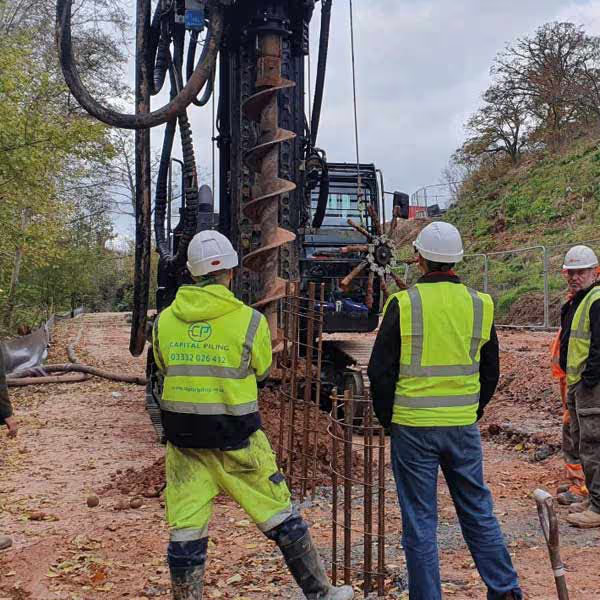
Understanding Mini Pile Load Capacity
Mini pile load capacity refers to the amount of structural load a pile can safely support and transfer into the ground. Mini piles are smaller in diameter than traditional piling systems. Despite this, they are capable of supporting significant loads when designed correctly.
Load capacity is not determined by a single factor. It is influenced by pile diameter, depth, ground conditions, and the method of installation. These are all considered during the design process.
How Load is Transferred
Mini piles support loads through a combination of shaft friction and end bearing.
Shaft friction is generated along the surface of the pile as it interacts with the surrounding soil. Meanwhile, end bearing occurs where the base of the pile rests on a stronger layer of ground. The balance between these two mechanisms depends on the soil type and the depth at which the pile is installed.
This allows mini piles to perform effectively across a wide range of ground conditions.
Typical Load Capacities
The load capacity of a mini pile can vary significantly depending on its design. Smaller diameter piles used in residential applications may support relatively moderate loads. Meanwhile, larger diameter piles can carry substantially higher loads.
In general:
- Smaller piles (100mm–200mm) are typically used for lighter structural loads
- Medium diameters (200mm–300mm) are used for standard residential and light commercial applications
- Larger mini piles (up to 450mm) are used where higher loads or more demanding ground conditions are present
The exact capacity will always depend on site-specific conditions rather than a fixed value.
The Influence of Ground Conditions
Ground conditions play a critical role in determining pile capacity. Strong, dense soils or competent bearing strata will allow higher loads to be supported. Weaker or more variable soils may require deeper piles or increased diameter to achieve the same performance.
Across London and the South East, clay soils and made ground are common. Pile design focuses on reaching stable layers below the active zone for consistent load transfer.
The Role of Pile Depth
Depth is one of the most effective ways of increasing load capacity. By extending the pile further into the ground, additional shaft friction is generated, and more stable strata can be reached.
In many cases, increasing depth is more efficient than increasing diameter. This is particularly true of restricted access sites. Here, installation constraints may limit pile size.
The Effect of Diameter on Capacity
Pile diameter directly affects both shaft friction and end bearing. Larger diameters increase the surface area of the pile. This improves frictional resistance. It also increases the base area available for end bearing.
This makes larger diameter mini piles suitable for projects with higher load requirements. That said, they must still be practical to install within site constraints.
Installation Method and Performance
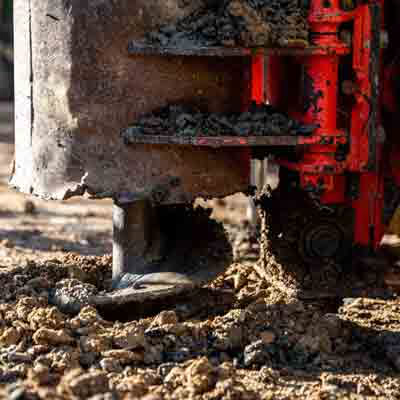
The method used to install the pile can also influence its performance. Different piling systems interact with the ground in different ways. This can affect both shaft friction and overall capacity.
For this reason, the chosen method is matched to the ground conditions and structural requirements. This works to ensure the most efficient and reliable result.
Design and Engineering Considerations
Mini pile load capacity is determined through engineering design. It's typically based on ground investigation data and structural requirements. Factors such as soil strength, pile spacing, and load distribution are all considered. They work to ensure the foundation performs as intended.
With limited ground data, designs start from assumptions and adapt as installation reveals more.
A Controlled and Adaptable System
One of the key advantages of mini piling is its ability to adapt to site conditions. Load capacity can be adjusted through changes in depth, diameter, or installation method. This allows the system to be tailored to suit the specific requirements of the project.
This flexibility makes mini piling a reliable solution across a wide range of construction scenarios.
Do You Need More Information?
Do you require further guidance on mini pile load capacity? Would you like to discuss the requirements of your project? If so, a specialist contractor such as Capital Piling can review your drawings and site conditions. We'll advise on the most appropriate design.