Open Bore Piling Process
The open bore piling process involves forming reinforced concrete piles within a drilled borehole, allowing structural loads to be transferred into stable ground at depth. It is a controlled installation method that is widely used where ground conditions are suitable and where minimising disruption on site is important.
The process is carried out in stages, each of which needs to be carefully managed to ensure the integrity of the bore and the performance of the finished pile.
What the Process Involves
Open bore piling is a sequential operation, with each stage building on the previous one.
It begins with drilling to the required depth, followed by preparing the bore, installing reinforcement and placing concrete. The success of the method depends on maintaining bore stability throughout and ensuring that each stage is completed correctly before moving on.
Because the process is relatively controlled compared to driven piling, it allows for a more measured approach, particularly on sites where conditions need to be carefully managed.
Step by Step Installation
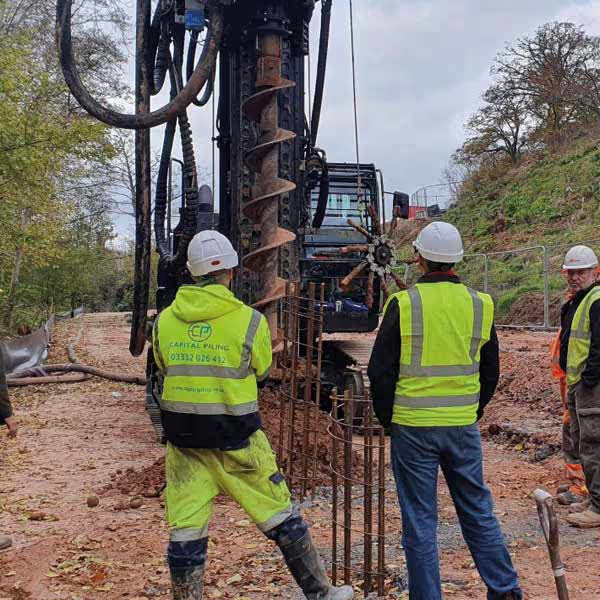
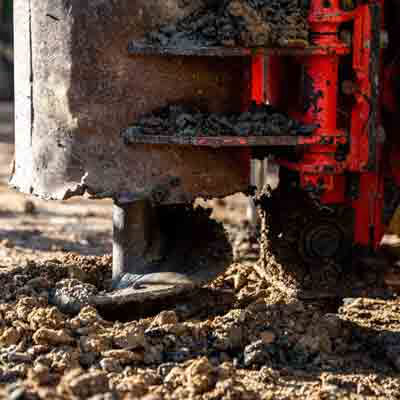
The process starts with a sectional auger drilling into the ground, removing soil and creating a borehole to the specified depth.
Once the target depth is reached, the bore is checked to ensure it is suitable for concreting. A reinforcement cage is then lowered into position, followed by the placement of concrete to form the pile.
Timing is important during this stage. The bore needs to remain stable while the reinforcement is installed and the concrete is placed, which is why the sequence is carried out efficiently and without unnecessary delays.
Suitability on Site
The open bore piling process is typically used on sites where ground conditions allow the bore to remain stable during installation.
It is commonly applied on residential and low-rise commercial projects, as well as urban sites where reducing noise and vibration is a priority. The method is also well suited to locations with restricted access, as sectional equipment can be used to adapt to the available space.
Where conditions are suitable, the process provides a reliable and efficient way of installing foundations.
Control and Execution
Maintaining control throughout the process is key to achieving consistent results.
This includes ensuring that drilling reaches the correct depth, that the bore is suitable for reinforcement and concreting, and that materials are placed correctly. The coordination between drilling, reinforcement and concreting stages is what ultimately determines the quality of the finished pile.
Attention to detail during installation helps ensure that the pile performs as designed once in service.
Managing Installation Risks
The main consideration in open bore piling is maintaining the stability of the bore during installation.
In stable ground conditions, this can be achieved without additional support. However, in more variable or water-bearing soils, extra measures may be required to prevent collapse before concreting takes place.
Proper planning and sequencing are essential, as delays or interruptions during installation can affect the condition of the bore. Ensuring that each stage flows smoothly helps reduce risk and supports a consistent outcome across the project.