Reinforcement Cage Design
Reinforcement cage design is a critical part of any piling system, ensuring that each pile has the structural strength required to support the loads placed upon it. In SFA open bore piling, the reinforcement cage works together with the concrete to provide both strength and stability within the ground.
The design of the cage is not standardised across projects. It is developed based on structural requirements, ground conditions and the specific performance expected from each pile.
At Capital Piling, reinforcement design is handled in-house alongside the overall piling design, allowing each cage to be tailored to the project and coordinated directly with the installation process.
Why Reinforcement Design Matters
The reinforcement cage plays a key role in how a pile performs once installed. It provides resistance to compressive forces, as well as any bending or lateral loads that may act on the foundation.
Without the correct level of reinforcement, a pile may not perform as intended under load. At the same time, over-reinforcing can lead to unnecessary cost and complications during installation.
For this reason, the design is carefully balanced to achieve the required structural performance while remaining practical to construct and install on site.
How Reinforcement Cages Are Used
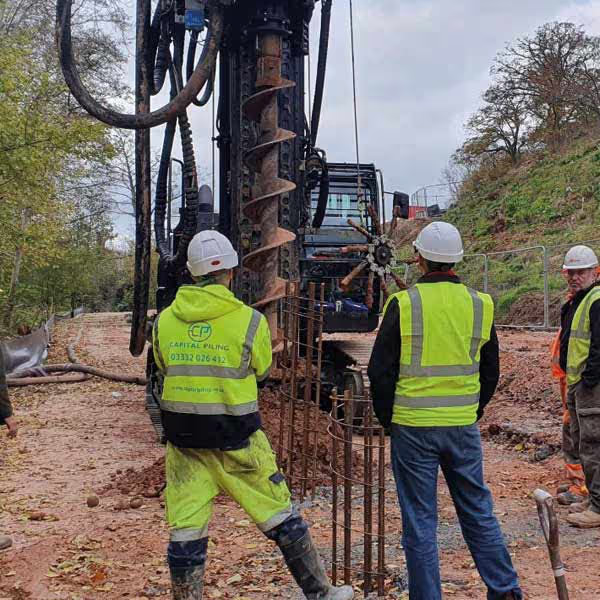
Once the bore has been drilled to the required depth, the reinforcement cage is lowered into position before concrete is placed.
The cage is typically fabricated from steel bars arranged to form a rigid structure that fits within the bore. It must be designed to maintain its shape during handling and installation, while also allowing concrete to flow around it effectively.
The positioning of the cage within the pile is also important, as it ensures the reinforcement is correctly located to resist the loads applied to the foundation.
Application Across Different Projects
Reinforcement cage design varies depending on the type of project and the loads involved.
On residential projects, reinforcement may be relatively straightforward, designed to support typical building loads. On more complex or heavily loaded structures, the design may require additional reinforcement or more detailed configuration to account for increased forces.
By designing cages specifically for each project, it is possible to ensure that the foundation performs as required without introducing unnecessary complexity.
Design and Fabrication Considerations
The design of a reinforcement cage takes into account factors such as pile diameter, depth and loading conditions.
At Capital Piling, our in-house design team works closely with the installation team to ensure that cages are not only structurally suitable, but also practical to install within the constraints of the site.
This includes considering how cages will be transported, lifted and positioned, particularly on restricted access sites where space and handling may be limited.
By aligning design with installation, the process becomes more efficient and reduces the risk of issues on site.
Practical and Structural Considerations
Reinforcement cages must be designed to suit both the structural requirements and the realities of installation.
Cages that are too large or complex can be difficult to install, particularly in restricted access environments. At the same time, insufficient reinforcement can compromise the performance of the pile.
Achieving the right balance is essential. By combining engineering design with practical site experience, it is possible to develop reinforcement solutions that work effectively in real-world conditions.
If you’re working on a project where reinforcement requirements are unclear, early input from a specialist contractor can help ensure the design is both suitable and buildable.