Understanding the real differences between screw piling and concrete piling methods
Screw piles and concrete piles are both structural foundation solutions capable of transferring building loads from the structure above down into competent ground below, but they achieve this in fundamentally different ways and they are suited to different sets of circumstances. Understanding the real differences between the two helps project teams make a more informed choice at the design stage rather than defaulting to one method out of familiarity or assuming one is always better than the other. The right choice depends on the ground conditions, the structural loads, the site constraints, and the programme requirements of the specific project, and it should always be based on a proper assessment of those factors rather than convention.
The core differences between screw piles and concrete piles
Screw piles are installed by rotation without excavation or concrete. They are structural steel elements that develop their load carrying capacity through the bearing resistance of the helical plates against the surrounding soil, verified in real time through installation torque monitoring. Concrete piles, whether bored cast in-situ methods like CFA or SFA piling, or driven methods like SCD piling, are formed from reinforced concrete and derive their capacity from shaft friction along the pile length and end bearing at the tip, verified through installation records and post installation testing.
Screw piles produce no arisings, require no concrete supply, and are ready to connect to the structure above immediately after installation. Concrete piles produce spoil during installation, require a concrete supply and curing period, and involve a more complex post installation sequence of pile head cropping, reinforcement exposure, and ground beam or slab construction before the foundation is complete. Screw piles can be extracted and reused. Concrete piles cannot.
On sites subject to Tree Preservation Orders, protected land designations, or environmental constraints that restrict ground disturbance and excavation, screw piling can satisfy the requirements of the planning authority or arboriculture consultant in a way that concrete piling methods typically cannot, making it not just a preferred alternative but in many cases the only compliant option available.
How the two methods differ in practice during installation and post installation
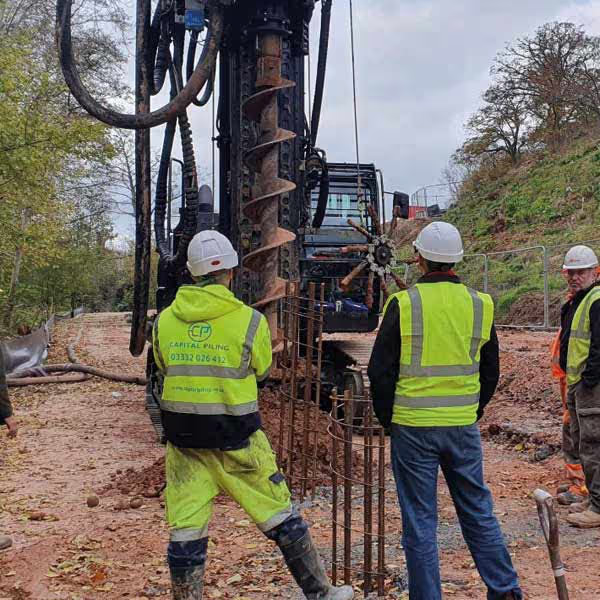
In screw piling the pile is rotated into the ground by a hydraulic torque motor, advancing steadily until the required depth and torque are achieved. Pile caps or brackets are fixed to the pile heads immediately after installation and the ground beams or RC slab above can follow without delay. The entire sequence from pile installation to a foundation ready for the structure above is faster than any concrete based method because there is no wet concrete in the pile itself and no curing period to plan around.
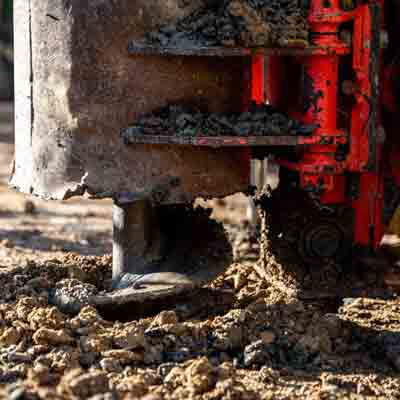
In concrete piling, whether bored or driven, the pile is formed from reinforced concrete either cast in-situ in a bore or poured into a driven steel casing. Once the concrete has cured, pile heads are cropped to the correct level, reinforcement is exposed, and ground beams or RC slabs are formed above to complete the foundation. This sequence involves more stages, more materials, more logistics, and more programme time than screw piling, and it introduces dependencies on concrete supply, curing conditions, and the coordination between the piling and groundworks teams that screw piling does not.
When screw piling is the better choice and when concrete piling is more appropriate
Screw piling is the better choice when the ground conditions are suitable for helical installation, the structural loads are within the range achievable with the method, the site has constraints around access, noise, or ground disturbance that favour a compact and low impact approach, or where planning requirements including TPO restrictions or protected land designations make a concrete free, minimal excavation method a requirement rather than a preference.
Concrete piling is more appropriate when the structural loads are higher than screw piling can reliably achieve in the specific ground conditions, when the ground profile requires a deeper or larger pile than the helical method can deliver, or when ground conditions including very loose soils, running sands, or highly variable profiles make the torque to capacity relationship less reliable as a capacity verification method. In these situations bored or driven concrete methods offer greater structural capacity and more robust installation performance than screw piling can provide.
We assess both options as part of the pre-construction design process on every project where either method could be appropriate, and our in house design team can advise on the most suitable choice based on the ground investigation data and the structural requirements of your specific project.
The technical differences in how capacity is achieved and verified
Screw pile capacity is derived from the bearing resistance of the helical plates against the surrounding soil and is verified during installation through the torque to capacity relationship specific to the pile geometry and ground conditions. Using shaft diameters of 60mm, 76mm, and 89mm with helix configurations tailored to each project, we achieve reliable capacity verification in real time for every pile without the need for separate post installation load testing in most cases.
Concrete pile capacity is derived from shaft friction along the pile length and end bearing at the tip, calculated using the soil parameters from the ground investigation and verified through installation records, set criteria for driven piles, or post installation integrity and load testing for bored methods. The calculation methods and verification approaches for concrete piles are more established in the wider industry and the achievable capacity range is generally greater, which is why concrete piling remains the dominant method for heavily loaded structures and challenging ground conditions where screw piling cannot deliver the required performance.
What to think about when choosing between screw piling and concrete piling for your project
The choice between screw piling and concrete piling should be made on the basis of a proper assessment of the ground conditions, the structural loads, the site constraints, the programme requirements, and any planning or environmental requirements that apply. It should not be made on cost alone, on the basis of what method a contractor has available, or on the assumption that one method is inherently superior to the other regardless of the project circumstances.
On projects where both methods are technically viable, the comparison should consider the full picture including programme duration, site logistics, post installation groundworks requirements, planning compliance, and the total cost of the foundation from first pile to finished slab. We are happy to work through that comparison with you and give an honest assessment of which method is likely to deliver the best outcome for your specific project. For clients without a structural engineer in place, our in house design team can manage the full method selection and foundation design process from the ground investigation data upwards, making sure the decision is made on the right basis before any commitment is made.