Site Access Requirements
Site access is one of the first and most important considerations when planning any piling works. It determines what equipment can be used, how materials are delivered and how efficiently the installation process can be carried out.
In SFA open bore piling, access plays a particularly important role because the method is often selected specifically for sites where space is limited or conditions are constrained. Understanding the access requirements early on helps ensure that the chosen approach is both practical and achievable from the outset.
Why Access Matters
Even with a suitable design and ground conditions, piling works can be affected if access is not properly considered.
Restricted entry points, limited working space or overhead constraints can all influence how the work is carried out. In some cases, these factors may determine the type of equipment used or how materials are handled on site.
Addressing access at an early stage helps avoid delays and ensures that the piling process can proceed without unnecessary complications.
Assessing Access on Site
Access is typically assessed before work begins, taking into account factors such as entry width, available working area and any physical restrictions.
This might include narrow driveways, rear garden access, internal working areas or low headroom conditions. Each of these can affect how equipment is brought onto site and how piling operations are set up.
In many cases, the solution involves adapting the approach to suit the site rather than trying to apply a standard setup.
Working in Restricted Environments
Access considerations are especially important on residential and urban projects, where space is often limited and surrounding structures need to be protected.
On these sites, piling may need to be carried out in tight spaces or in close proximity to existing buildings. This requires careful planning to ensure that equipment can operate safely and efficiently within the available area.
The ability to work within these constraints is one of the reasons why SFA open bore piling is commonly used in these environments.
Equipment and Logistics
The type of equipment used on site is directly influenced by access conditions.
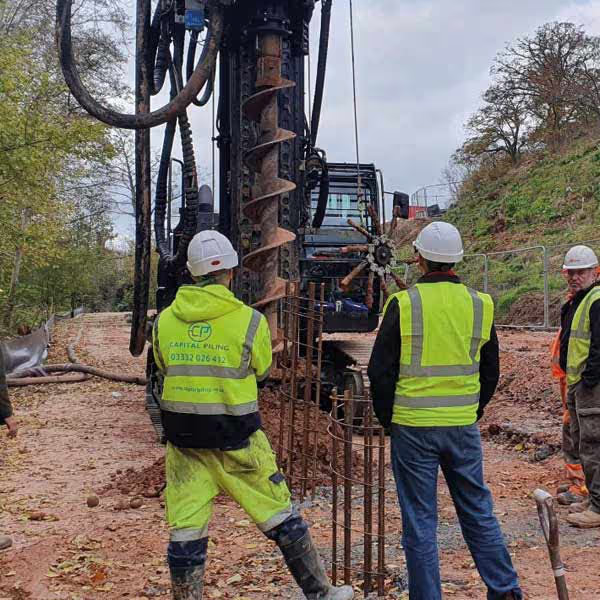
On more open sites, larger rigs may be suitable, allowing for faster installation. On restricted sites, smaller or sectional equipment is often used to navigate tight spaces and limited entry points.
Material delivery and spoil removal also need to be considered, as these can impact how the site operates during piling works. Coordinating these elements helps ensure that the process runs smoothly from start to finish.
Planning for Efficient Delivery
Failing to properly account for site access can lead to delays, additional costs or the need to adjust the installation approach once work has already begun.
By assessing access early and planning accordingly, it is possible to select the right equipment and method from the outset. This helps ensure that the piling works can be carried out efficiently, even on more challenging sites.
For projects where access is uncertain, an early review can help identify any limitations and provide a clear plan for how the work will be delivered.