Suitable Ground Types
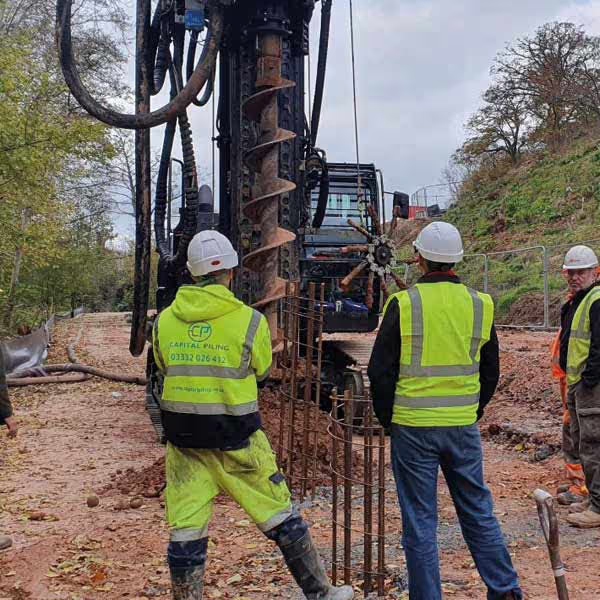
SFA open bore piling is most effective when ground conditions allow a stable borehole to be formed during drilling. The method relies on the ground maintaining its shape long enough for reinforcement and concrete to be installed, which makes soil stability a key factor in determining suitability.
It is commonly used on sites where the ground profile is consistent and capable of supporting an open bore without collapse. Understanding the type of soil present is essential before selecting this method, as it directly affects both installation and long-term performance.
How Ground Conditions Affect Suitability
The success of open bore piling depends on how the soil behaves during drilling. Stable soils allow the bore to remain open, making the process straightforward and efficient.
In contrast, loose or highly variable ground can present challenges, as the sides of the bore may collapse before concreting takes place. This is why ground conditions are always assessed in advance, ensuring the chosen method is appropriate for the site.
The more predictable the soil, the more controlled the installation process will be.
Interaction Between Soil and Installation
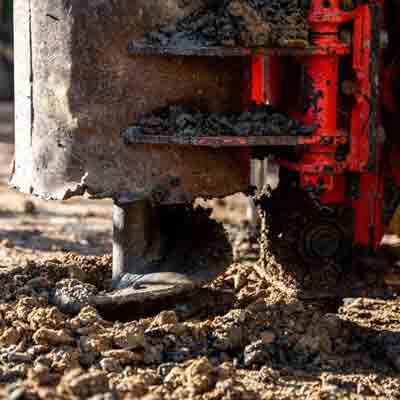
During installation, the auger removes soil to create the bore. For the method to work effectively, the surrounding ground must be able to support itself temporarily without additional reinforcement.
In suitable conditions, this allows the bore to be formed cleanly and filled with concrete without complications. Where the soil is less stable, additional measures such as temporary casing may be required to maintain the integrity of the bore.
This interaction between soil and installation method is one of the main reasons why ground investigation plays such an important role in the design process.
Ground Conditions Typically Suited to Open Bore Piling
SFA open bore piling is generally well suited to:
- Clay soils that can hold their shape during drilling
- Dense sands and gravels with sufficient cohesion
- Sites with relatively consistent ground profiles
These conditions allow the bore to remain stable throughout the installation process, making the method efficient and reliable.
It is commonly used across residential and low-rise commercial projects where these types of ground conditions are present.
Assessing Ground Suitability
Before any piling work begins, a ground investigation is typically carried out to understand the soil profile and its behaviour.
This may include borehole testing and soil classification, which help determine whether the ground can support an open bore. The results are then used to inform the design of the piles, including depth, diameter and reinforcement.
Accurate ground data ensures that the chosen method is both safe and effective for the specific conditions on site.
When Ground Conditions May Limit Use
SFA open bore piling may be less suitable in loose, granular or water-bearing soils where the bore is unlikely to remain stable during installation.
In these situations, the ground may require additional support, or an alternative piling method may be more appropriate. Highly variable ground conditions can also introduce uncertainty, which needs to be addressed through design or method selection.
Choosing the right approach depends on a clear understanding of the site, ensuring the foundation system performs reliably over the long term.