A structural foundation method that installs without concrete or excavation
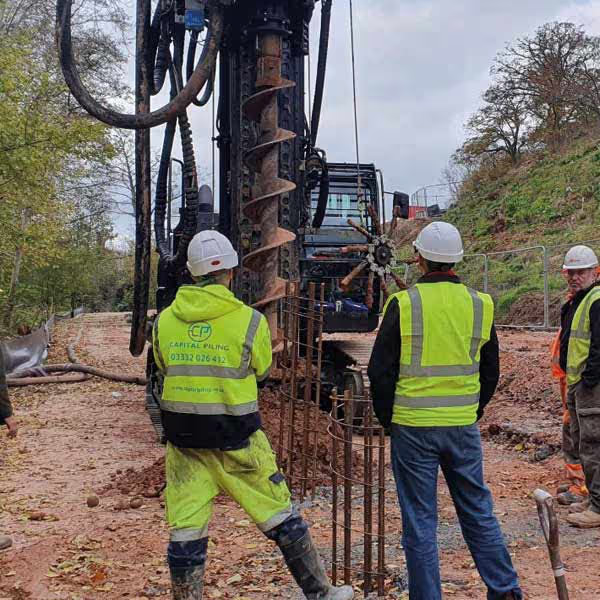
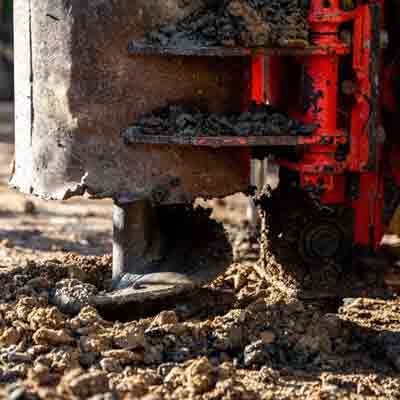
Screw piles, also known as helical piles, are structural steel foundation elements installed by rotating them into the ground using a hydraulic torque motor mounted on a specialist rig or excavator. A central steel shaft with one or more helical plates welded to it is turned into the ground, advancing steadily until it reaches the required depth and achieves the specified installation torque. Once installed, pile caps or brackets are fixed to the pile heads and the ground beams or RC slab above are formed to complete the foundation.
It is a method that carries genuine structural loads for residential and commercial buildings, and it does so without any concrete in the pile itself, without excavation, and without the noise and vibration associated with driven methods. That combination of structural performance, speed, and minimal disruption is what makes it an increasingly popular choice across a range of construction projects where the ground conditions and structural requirements suit it.
What sets screw piling apart as a structural foundation method
Screw piles are installed by rotation, not by driving or drilling, which means there is no percussive impact and no bore to maintain during installation. The helical plates cut into the soil as the shaft turns, advancing the pile at a rate determined by the helix pitch. Installation torque is monitored continuously and correlates directly to the load bearing capacity of the pile, providing real time confirmation of performance during installation without the need for post installation load testing in most cases.
Because no concrete is used in the pile itself there is no curing period before the connecting structure can progress. Once the piles are in and the pile caps or brackets are fixed, ground beams or RC slabs can be formed immediately, which significantly shortens the overall foundation programme compared to cast in-situ methods. Screw piles are also removable where a temporary or demountable structure requires it, and the absence of concrete arisings simplifies spoil management considerably.
How screw piles are installed and connected to the foundation structure above
The specialist rig or excavator mounted torque motor positions over the pile location and begins rotating the screw pile into the ground. The helical plates cut through the soil and draw the pile downwards consistently with each revolution. Torque is monitored and recorded throughout, and when the required torque is achieved at or beyond the minimum design depth, installation is complete.
Pile caps or structural brackets are then fixed to the pile heads. These connect the pile to the ground beams or RC slab above, which tie the pile heads together, distribute the loads between them, and provide the structural platform the building sits on. The ground beams or slab are designed by the structural engineer to work with the pile layout and specification, and where we are delivering the full foundation package the piling, ground beams, and RC slabs are all designed and built to work together as an integrated system from the outset.
The project types and structural applications where screw piling is most commonly specified
Screw piling is specified on residential and commercial projects where the ground conditions are suitable, the structural loads are within the range the method can achieve, and the advantages of a concrete free, low vibration installation are valuable. New build residential schemes, extensions requiring structural foundations, commercial portal frame buildings, modular and volumetric construction, infrastructure projects, and temporary works are all contexts where screw piling is regularly used as a primary structural foundation method.
It is particularly well suited to sites with restricted access, sites where programme is tight, and urban environments where the low noise and vibration characteristics of the method are important. We install screw piles across residential and commercial projects throughout London and the south east, working with structural engineers and main contractors to deliver foundations that are right for the ground and the structure from day one.
The technical characteristics of structural screw piles and how they are specified
Structural screw piles are manufactured from hot rolled or hollow section steel. The shaft diameters we work with are 60mm, 76mm, and 89mm, covering the range of residential and commercial applications we regularly deliver. Helix diameters range from 200mm to 450mm or more, and a pile may carry one, two, or three helical plates depending on the load requirements and the ground profile.
The torque to capacity relationship used to verify pile performance during installation is derived during the design process using the soil parameters from the ground investigation and the specific pile geometry. This relationship is established before installation begins and applied to every pile during the programme, giving a consistent and documented basis for capacity verification across the full pile group. We work closely with structural engineers to develop the torque criteria and pile specification for each project, and for clients who do not yet have a structural engineer in place our in house design team can manage the full process from ground investigation review to completed foundation design.
What to know before screw piling is specified for a structural foundation
Screw piling is not suited to every ground condition. Hard ground, rock, cemented layers, or significant buried obstructions can cause installation refusal before the required depth or torque is achieved. In very loose or soft soils the torque to capacity relationship may be less reliable and additional load testing may be needed to verify pile performance. A ground investigation is essential before any screw pile design is finalised, both to confirm suitability and to provide the soil parameters needed for an accurate pile specification.
The structural loads also need to be within the range achievable with screw piling in the specific ground conditions on site. Where loads are higher or ground conditions are more challenging, a bored or driven method may be more appropriate. Getting the method selection right at the outset is what the rest of the foundation design depends on, and it is something we are happy to work through with you from the very first conversation.