What mini piling is and why it is a distinct foundation method rather than simply a smaller version of conventional piling
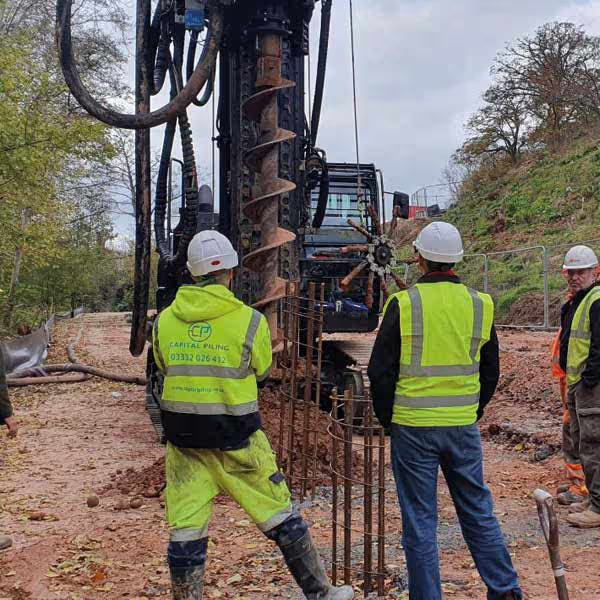
Mini piling is a method of installing deep foundation elements using compact, lightweight equipment capable of working in conditions where standard piling rigs cannot operate. The term refers to piles with shaft diameters typically ranging from 150mm to 300mm, installed using small tracked rigs or purpose built machines that can access restricted sites, work within low headroom environments, and operate on ground that cannot support the weight of conventional piling plant. Mini piles are not a scaled down version of a standard pile. They are a specific foundation solution designed for situations where access, headroom, load, or ground conditions make conventional methods impractical or disproportionately expensive.
The method covers several pile types including steel tube piles grouted into the ground, small diameter bored and cast in situ concrete piles, and hollow bar anchor piles, all of which share the characteristic of being installed with compact equipment through a small diameter bore. What they have in common is that they are designed to carry structural loads through weak or variable upper ground to competent bearing strata at depth, using equipment that can reach pile positions that would be inaccessible to a standard CFA or large bored pile rig.
Mini piling is used across residential, commercial, and infrastructure sectors on projects where the combination of structural load requirements, ground conditions, and site access constraints points toward a small diameter deep foundation as the most appropriate solution. On inner city residential projects, basement underpinning schemes, and sites with severely restricted access or low overhead clearance, mini piling is frequently the only foundation method that can physically deliver the required structural performance within the constraints the site imposes.
What mini piling is and why it is a distinct foundation method rather than simply a smaller version of conventional piling
Mini piling is a method of installing deep foundation elements using compact, lightweight equipment capable of working in conditions where standard piling rigs cannot operate. The term refers to piles with shaft diameters typically ranging from 150mm to 450mm, installed using small tracked rigs or purpose built machines that can access restricted sites, work within low headroom environments, and operate on ground that cannot support the weight of conventional piling plant. Mini piles are not a scaled down version of a standard pile. They are a specific foundation solution designed for situations where access, headroom, load, or ground conditions make conventional methods impractical or disproportionately expensive.
The method covers several pile types including steel tube piles grouted into the ground, small diameter bored and cast in situ concrete piles, and hollow bar anchor piles, all of which share the characteristic of being installed with compact equipment through a small diameter bore. What they have in common is that they are designed to carry structural loads through weak or variable upper ground to competent bearing strata at depth, using equipment that can reach pile positions that would be inaccessible to a standard CFA or large bored pile rig.
Mini piling is used across residential, commercial, and infrastructure sectors on projects where the combination of structural load requirements, ground conditions, and site access constraints points toward a small diameter deep foundation as the most appropriate solution. On inner city residential projects, basement underpinning schemes, and sites with severely restricted access or low overhead clearance, mini piling is frequently the only foundation method that can physically deliver the required structural performance within the constraints the site imposes.
What defines a mini pile and what makes the method distinct from other small diameter foundation solutions
Mini piles are defined primarily by their diameter and by the equipment used to install them rather than by a single installation method. The shaft diameter range of 150mm to 450mm places them below the diameter threshold of most standard CFA and large bored pile rigs, and the equipment used to install them is correspondingly compact, with machine widths and weights that allow access through domestic gateways, along narrow site passages, and into basement and undercroft spaces that larger plant cannot reach.
The load capacity of a mini pile is proportional to its diameter, its length, and the ground conditions it is installed into. Piles at the lower end of the diameter range carry modest loads suited to lightly loaded residential structures, while piles at the upper end of the range approaching 450mm can carry loads appropriate for commercial structures and more heavily loaded residential developments. This flexibility across the diameter range means that the pile specification can be matched precisely to the structural demand at each pile position rather than defaulting to a single standard diameter across the full project regardless of the variation in loads.
The ground conditions suitable for mini piling cover a wide range of soil types including cohesive clays, granular sands and gravels, weak rocks, and made ground of variable composition. The installation method is selected to suit the specific ground conditions encountered, with rotary boring used in stable cohesive ground, cased boring used where the ground is loose or water bearing, and hollow bar methods used where rapid installation and immediate grouting are required to stabilise the bore as it advances.
How mini piles are installed and how the installation method is adapted to suit the ground conditions and site constraints on each project
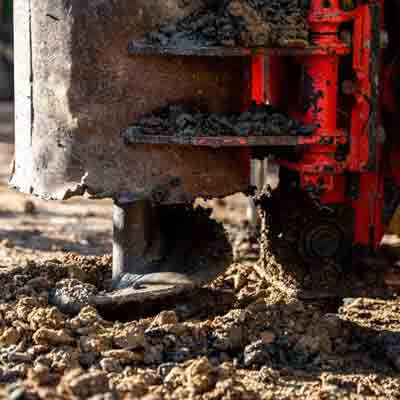
Mini pile installation begins with positioning the rig at the pile location and setting up the drive or rotation system aligned with the pile axis. The bore is advanced through the ground using a rotary drill bit, a continuous flight auger, or a percussive down the hole hammer depending on the ground conditions and the pile type being installed. In stable cohesive ground the bore can often be advanced without temporary casing, relying on the natural stability of the soil to maintain the bore profile until the pile element is placed. In loose, granular, or water bearing ground a temporary steel casing is advanced with the bore to prevent collapse, and the pile element is installed within the protection of that casing before it is withdrawn.
Once the bore reaches the required depth the pile element is installed. For a grouted steel tube pile this involves lowering a steel tube of the specified diameter into the bore and tremie grouting the annulus between the tube and the bore wall from the base of the pile upwards, filling the bore completely and bonding the tube to the surrounding ground over its full embedded length. For a cast in situ concrete mini pile the reinforcement cage is placed into the bore and concrete is placed by tremie from the base upward, in a process similar to a small diameter bored pile. For a hollow bar pile the installation is continuous, with the hollow bar acting simultaneously as the drill string, the reinforcement, and the grout delivery conduit, allowing the bore to be grouted in a single operation as the bar is withdrawn or as drilling proceeds.
Pile diameters, installation methods, grout and concrete specifications, and the structural parameters that govern mini pile design
Mini pile diameters in common use at Capital Piling range from 150mm for the smallest grouted tube piles used on lightly loaded residential applications up to 450mm for larger bored and cast in situ piles on commercial or more heavily loaded residential projects. Within this diameter range the pile capacity varies significantly depending on the installation method, the ground conditions, and the pile length, and the structural design must establish the required diameter and length combination for each pile position based on the actual loads and soil parameters rather than on assumed standard values.
Grout specification for grouted tube mini piles is typically a neat cement grout or a sand cement grout with a water to cement ratio selected to provide adequate fluidity for tremie placement while achieving the required 28 day compressive strength. Minimum grout strengths of 25 N/mm² at 28 days are typically specified for structural mini pile applications, with higher strengths required where the pile is subject to significant compressive or tensile loads that demand greater bond between the grout and the steel tube or the surrounding ground.
Steel tube specifications for grouted mini piles are selected based on the structural loads, the pile length, the corrosion conditions in the ground, and the installation method. Circular hollow sections in grades S275 or S355 are commonly used, with wall thicknesses selected to carry the design compressive and tensile loads with the required factor of safety. Where the ground conditions are corrosive, additional wall thickness, sacrificial thickness allowances, or protective coatings are specified to achieve the required design life.
What needs to be assessed before mini piling is confirmed as the right solution and what the consequences are of proceeding without adequate pre-construction preparation
Mini piling requires the same standard of pre-construction preparation as any other piling method, and the compact nature of the equipment does not reduce the importance of a thorough ground investigation, a properly coordinated structural design, and a clear understanding of the site access constraints before mobilisation. A ground investigation that does not extend to the full anticipated pile depth, or that does not identify buried obstructions, variable strata, or aggressive ground chemistry, will produce a design that may not be achievable in the ground conditions actually encountered during installation.
Underground services are a particular concern on the inner city and residential sites where mini piling is most commonly used. The pile positions must be checked against all available service records before installation begins, and any services within the zone of influence of the pile bores must be located and assessed before drilling starts. On sites where service records are incomplete or unreliable, trial holes should be used to verify the service positions before the pile layout is finalised and the rig is mobilised.
Capital Piling installs mini piles across a wide range of residential, commercial, and infrastructure applications, using equipment selected and configured for the specific access, headroom, and torque requirements of each project. Our in-house design team produces fully coordinated foundation designs from the ground investigation stage through to completion documentation, ensuring that the pile specification, the installation methodology, and the site constraints are all resolved before work begins rather than during the installation itself.