When Open Bore Piles Are Used
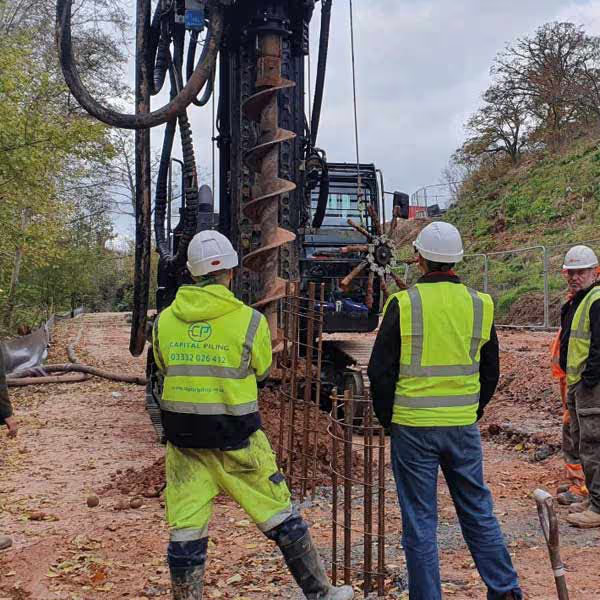
Open bore piling is typically used when a project requires a stable and reliable foundation solution without the disruption associated with driven piling methods. By forming piles within a drilled borehole, the system allows for controlled installation while minimising noise, vibration and impact on the surrounding area.
It is commonly selected on projects where access is restricted, where construction is taking place close to existing structures, or where ground conditions are suitable for maintaining an open bore during installation.
The method offers a practical balance between structural performance and site constraints, making it a widely used option across both residential and commercial construction.
Key Factors That Influence Its Use
The decision to use open bore piling is typically driven by a combination of site conditions and project requirements rather than a single factor.
It is often chosen where maintaining control over installation is important, particularly in environments where excessive vibration could affect nearby buildings or infrastructure. It also provides flexibility in terms of access, as sectional equipment can be used in areas where larger piling rigs would not be practical.
Ground conditions play a significant role as well. Open bore piling is best suited to soils that can remain stable during drilling, allowing the borehole to be formed and concreted without collapse.
Why This Method Is Selected
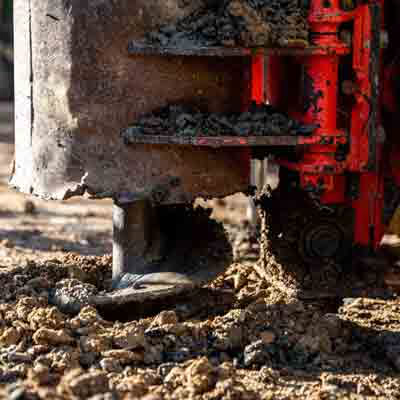
The suitability of open bore piling comes from the way it is installed. Because the process involves drilling rather than driving piles into the ground, it avoids the impact forces that can cause movement or disturbance in surrounding soil.
This makes it particularly useful on sites where protecting adjacent structures is a priority. It also allows for a more measured and controlled installation process, which can be beneficial when working within tight or complex site conditions.
As a result, it is often specified on projects where both technical performance and practical site limitations need to be carefully managed.
Typical Applications
Open bore piling is commonly used across a wide range of construction projects, particularly where conditions make other piling methods less suitable.
Typical applications include:
- Residential extensions and new builds
- Low-rise commercial developments
- Urban construction sites
- Projects with restricted access or working space
It is also frequently used in locations where construction is taking place close to existing buildings, as the reduced vibration helps minimise the risk of damage or disturbance.
Ground and Design Considerations
The use of open bore piling depends heavily on ground conditions. Stable soils such as clay or dense sand allow the bore to remain open during installation, making the process straightforward and efficient.
Before selecting this method, a ground investigation is usually carried out to confirm that the soil profile is suitable. This information is then used to determine pile depth, diameter and reinforcement requirements.
The design must ensure that the piles can safely transfer structural loads into competent ground layers.
When It May Not Be Suitable
While open bore piling is highly effective in the right conditions, it is not always the best option.
In loose, granular or water-bearing soils, the bore may become unstable during installation, which can require additional support such as casing or alternative piling techniques. Similarly, for projects involving very high loads, other methods may provide greater efficiency or capacity.
As with all foundation systems, the final decision should be based on a full assessment of ground conditions, structural requirements and site constraints.